Numan
Numan clinical notes
Saving over £400K of operational costs a year.
About
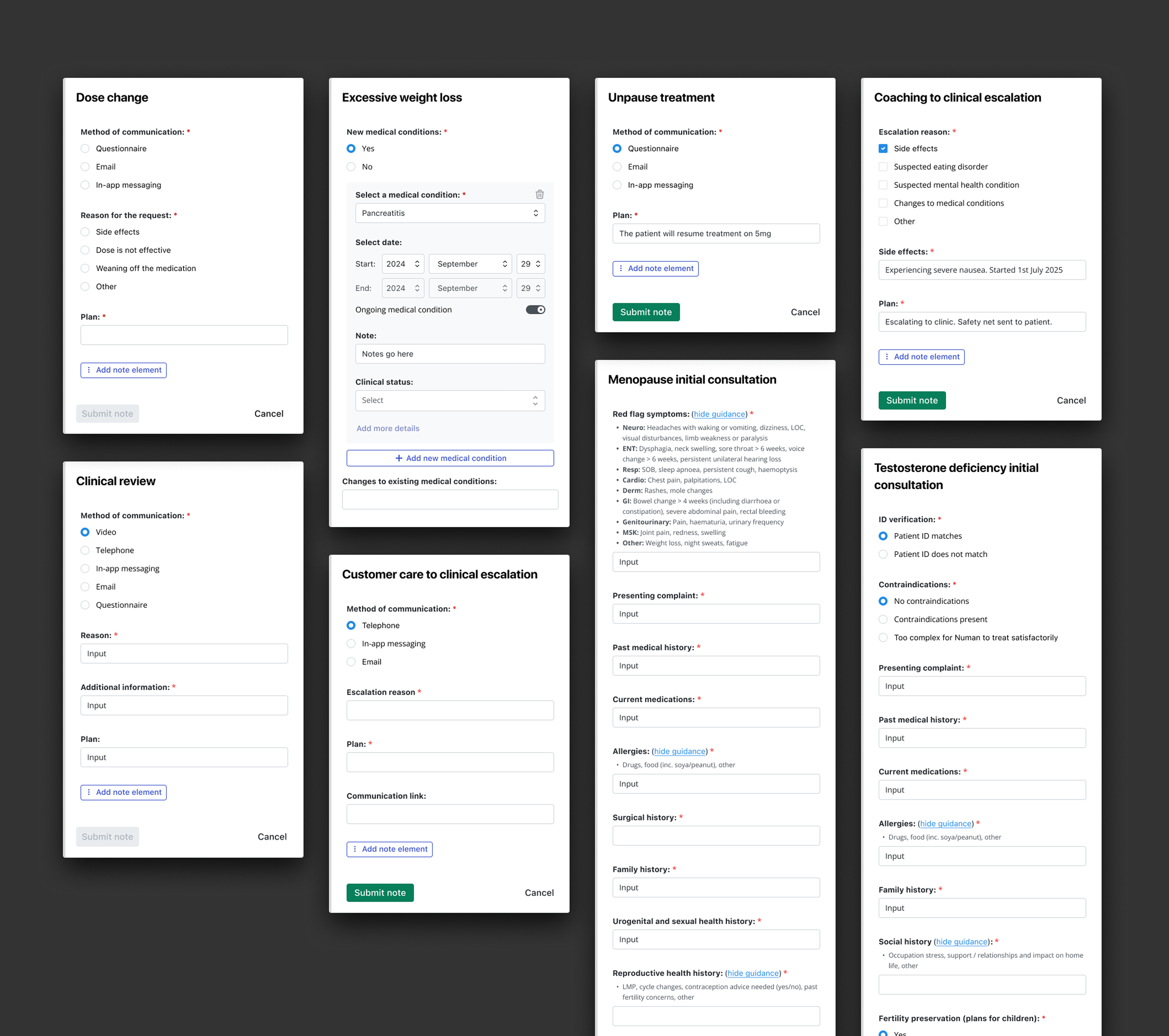
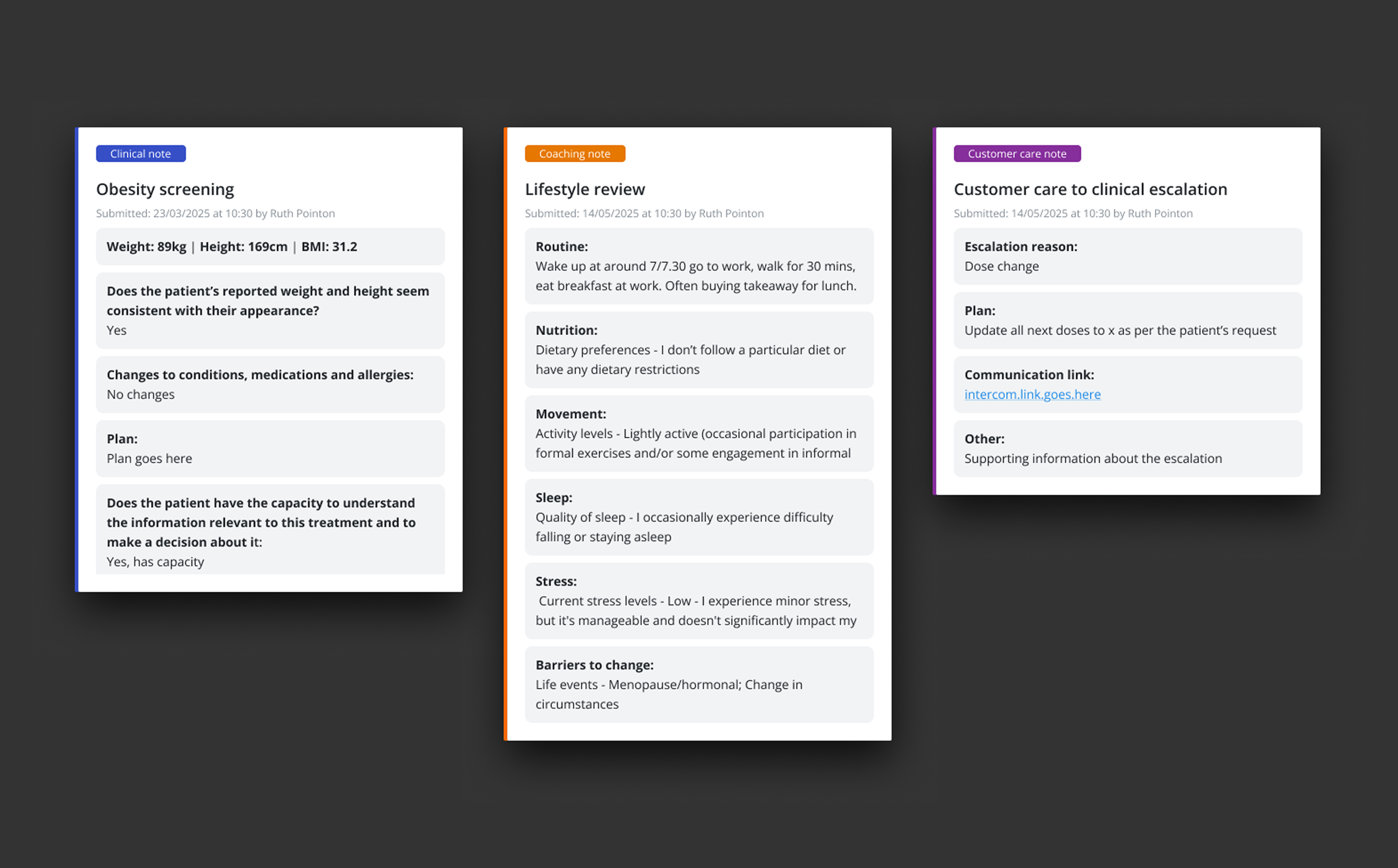
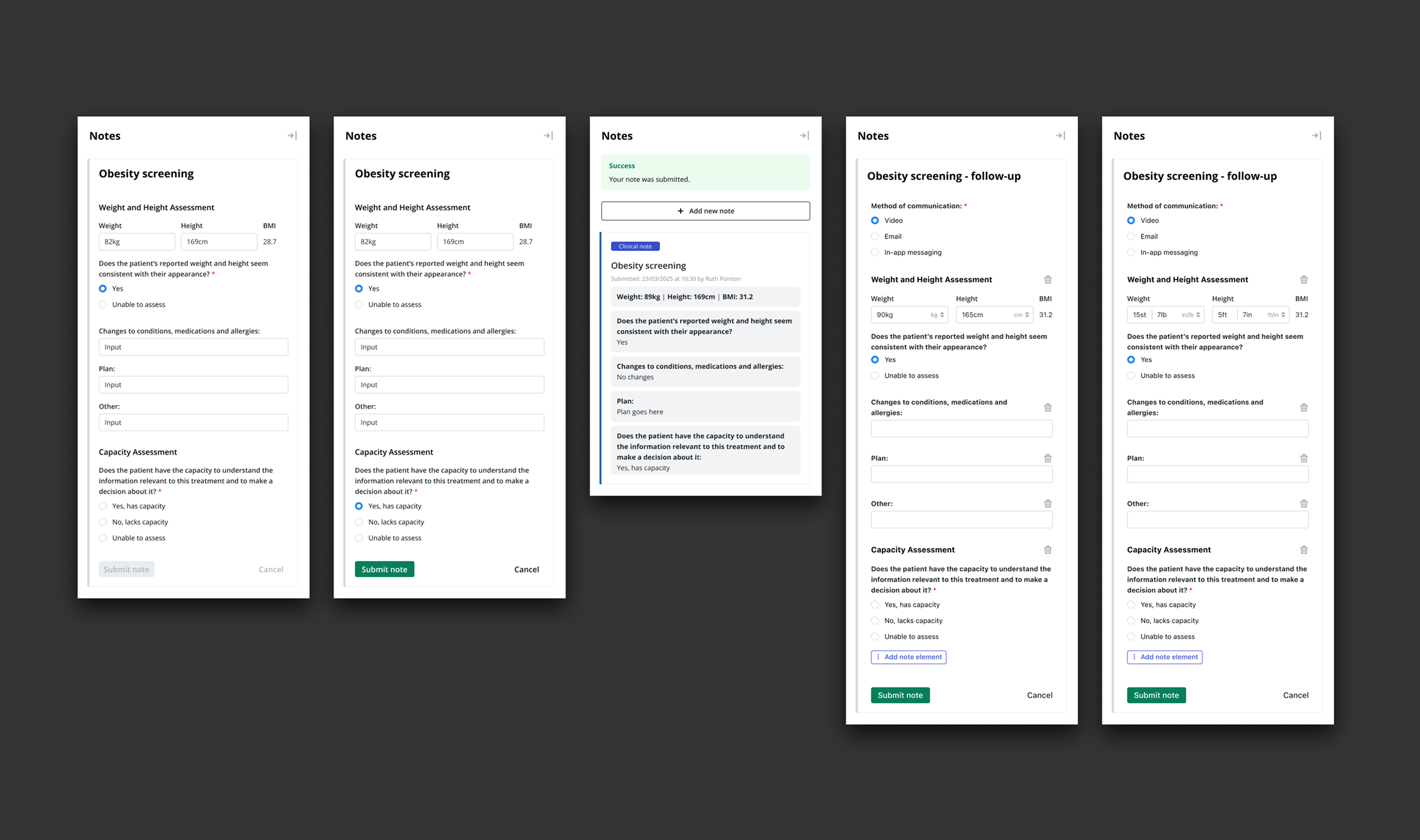
The Clinical Notes project was the first initiative I led after joining Numan. The goal was to replace a manual, risk-prone way of capturing clinical notes with a structured, reliable system - the first building block of a broader Electronic Health Record (EHR) we wanted to build. The project started with the obesity screening note and expanded to cover the full suite of notes clinicians need after each patient interaction.
Key Decisions
As a sole designer, designing an entire new EHR from scratch, I needed to make the right decision fast.
Initiating a technical discussions with the engineers and aligning the interface language with the data model from the start.
Making the notes lean by default, with room for clinicians to add detail when they need it.
Process
Hitting the ground running
The obesity screening note had a hard deadline driven by regulatory requirements, which meant I had very little time to build context before starting to design. In that first week I also had to make a foundational decision about which design system to use - not just for this note, but for the entire EHR we were planning to build. Rather than defaulting to the obvious choice under time pressure, I took the time to research the right library for the long term and presented my recommendation to the team. I was confident in that decision, and it held.
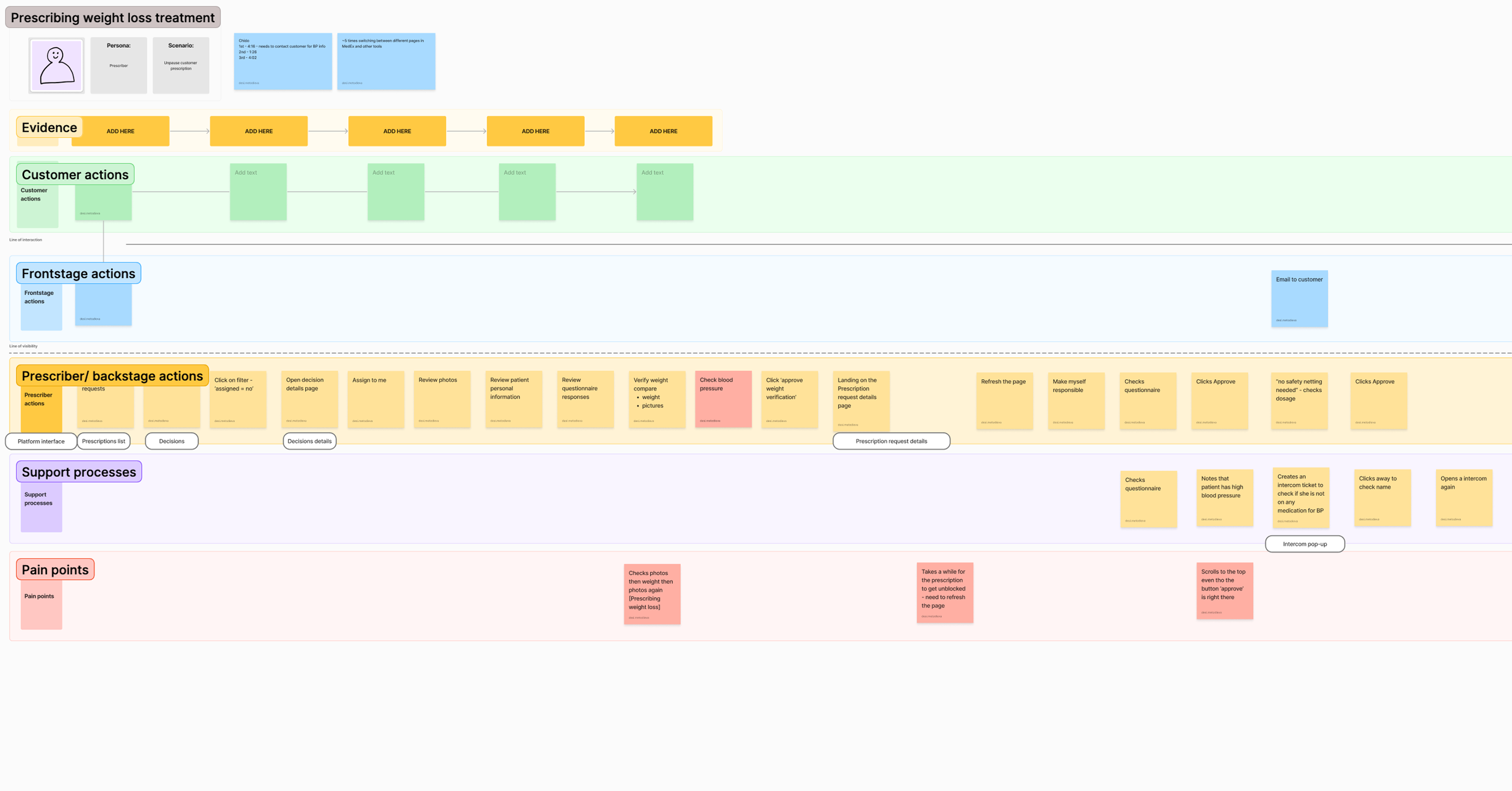
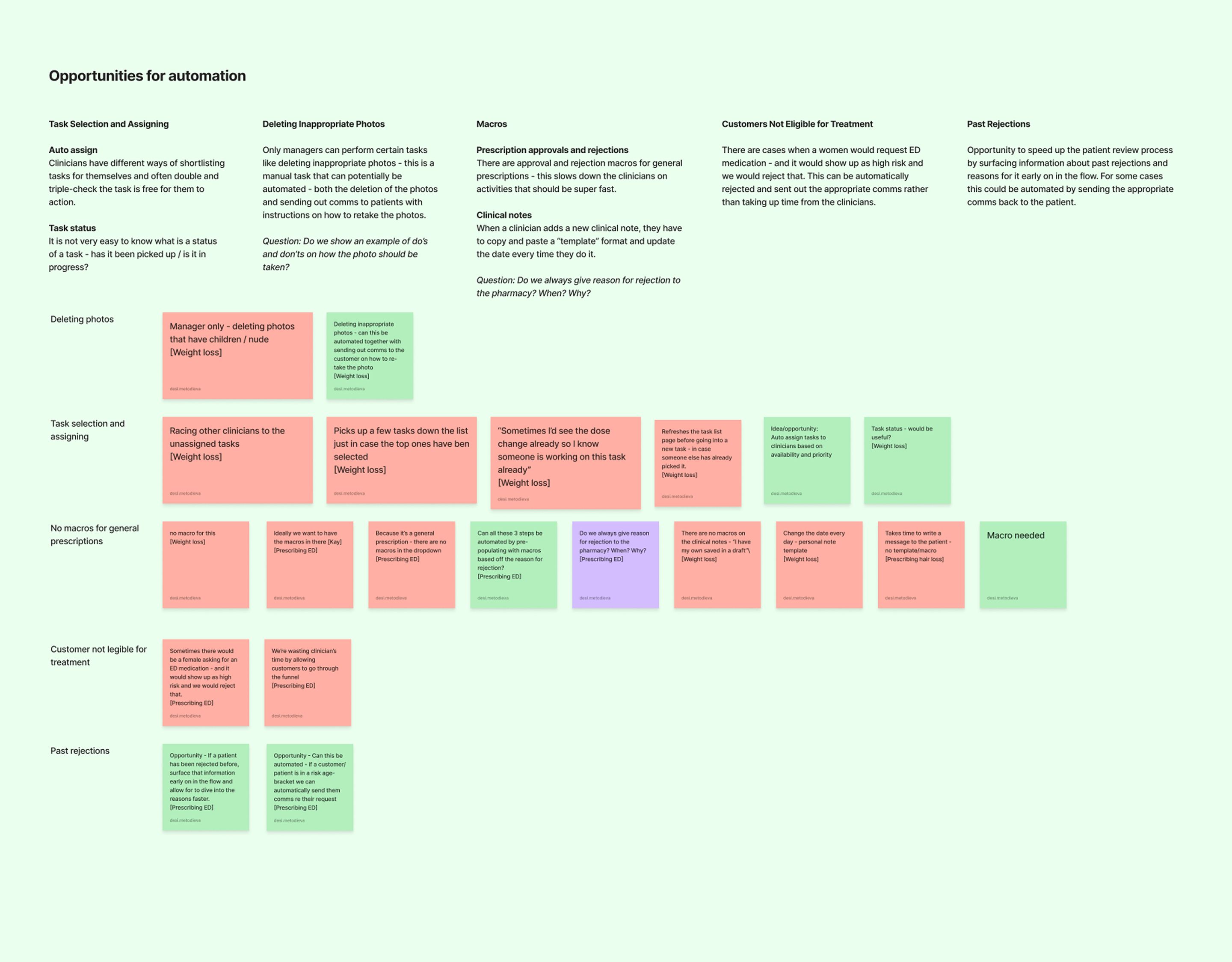
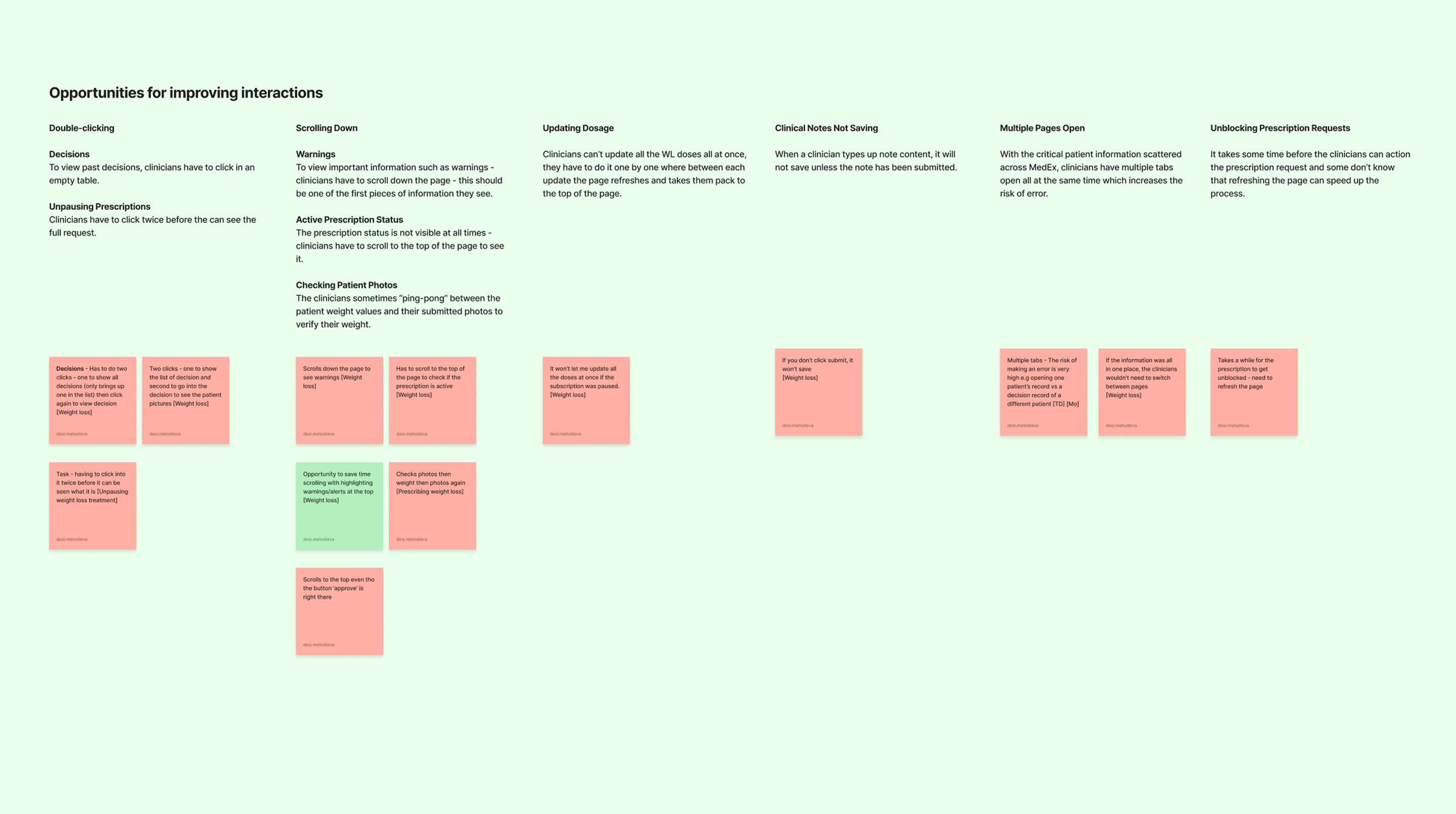
To get up to speed quickly on the clinical side, I shadowed weight loss and men's health clinicians to understand their workflows and validate what information they needed to capture after each patient interaction. Working closely with the Clinical Product Lead, I mapped their needs against her initial requirements and used that as the basis for the first designs.
Designing for healthcare constraints
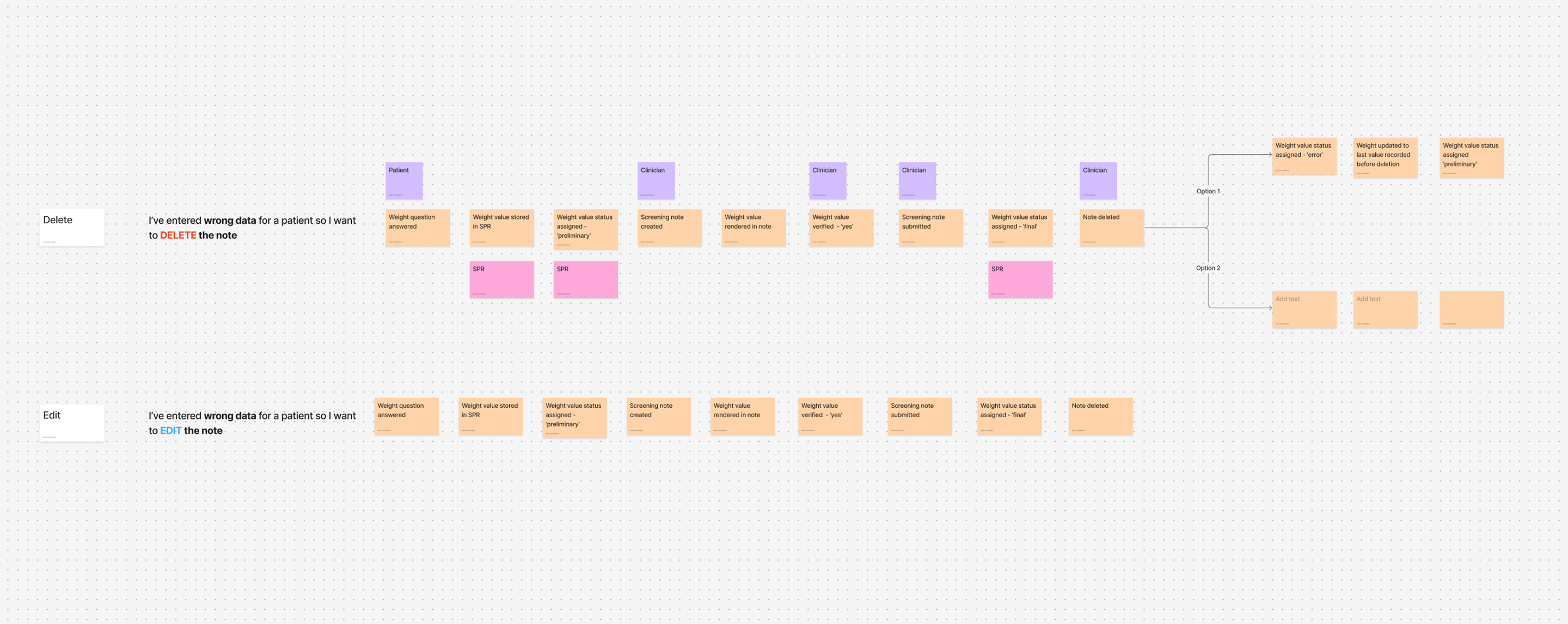
One of the most important things I did on this project was initiate a series of technical discussions that went beyond typical design handoff. I ran event storming sessions with the team to map out exactly what happens to a clinical note from the moment it's first captured - through preliminary and validated states - to what happens when it's edited or deleted. This wasn't my area of expertise, but I knew that without a shared understanding of how the data travels, we risked designing something that wouldn't hold up technically or clinically.
A key constraint that shaped the design was that in healthcare, data is never deleted - it's superseded. A new entry replaces an old one, but the audit trail is always preserved. Designing for that, and making sure the language in the interface matched the underlying data model, became one of the defining challenges of the project.
The design itself
I explored several interaction approaches for how notes would appear within the existing platform, playing back options to the team and pressure-testing them against technical feasibility and product constraints. User testing with five clinicians surfaced an important tension: some wanted to add more detail than the mandatory fields allowed, but we didn't want notes to become long or noisy. The solution was to keep the mandatory fields lean by default, with an option for clinicians to add their own elements when needed. With those refinements in place, the final designs were completed and adopted immediately at launch.