HeliosX / Dermatica
Subscription uptake on over-the-counter products
2021 – 2022
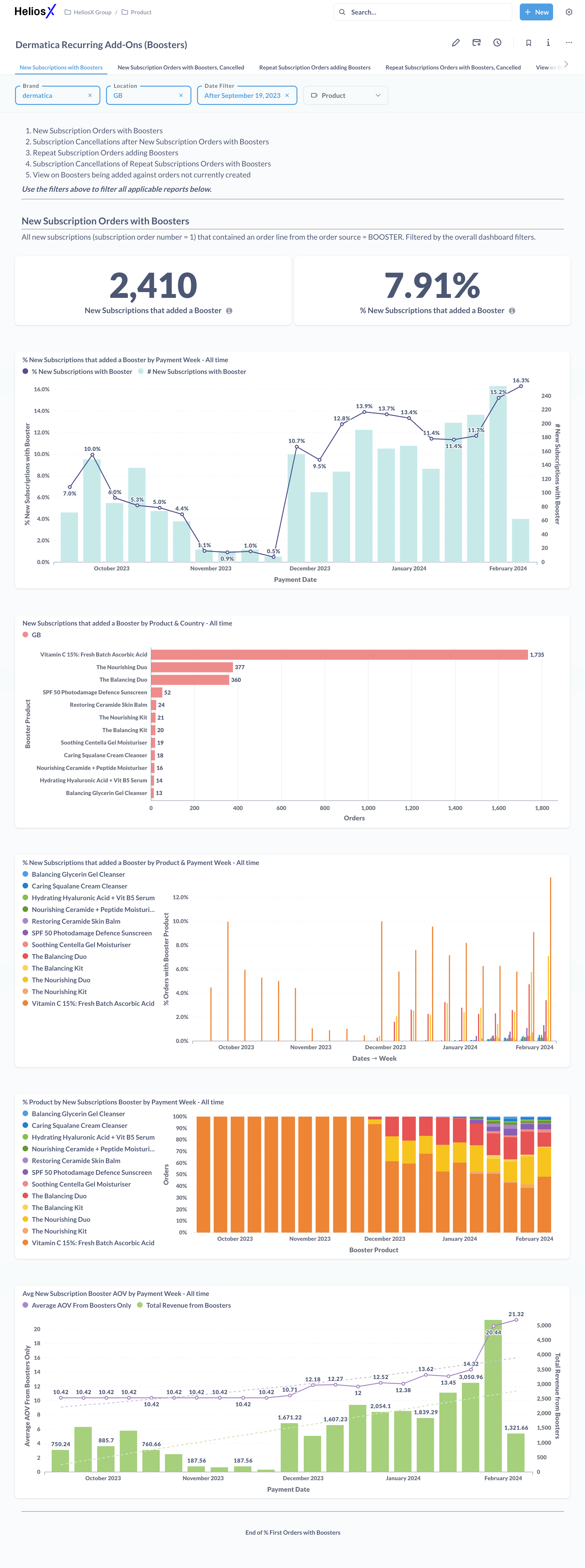
Increased the uptake on subscription products from 7% to 16% through rapid prototyping & testing
About
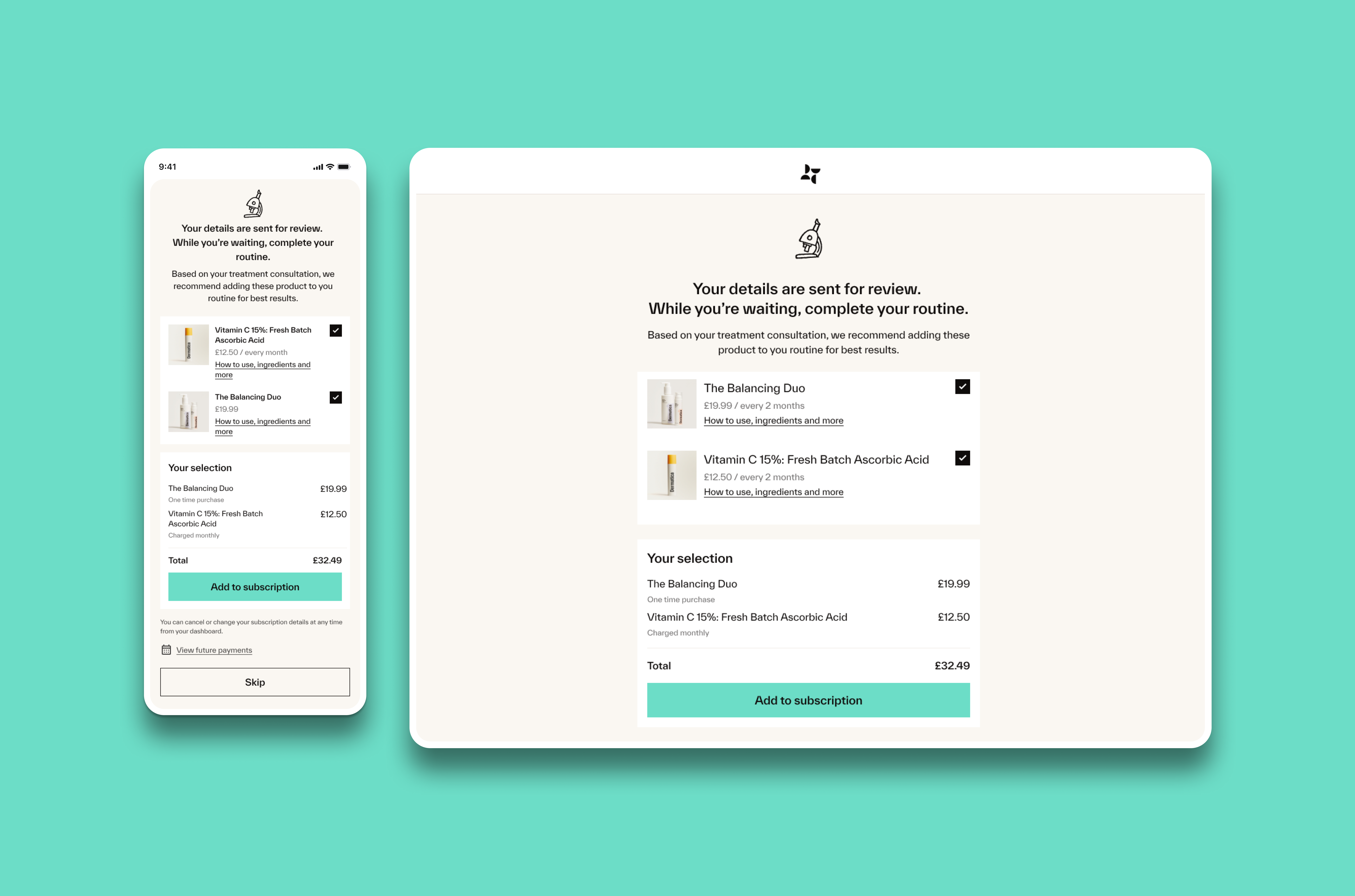
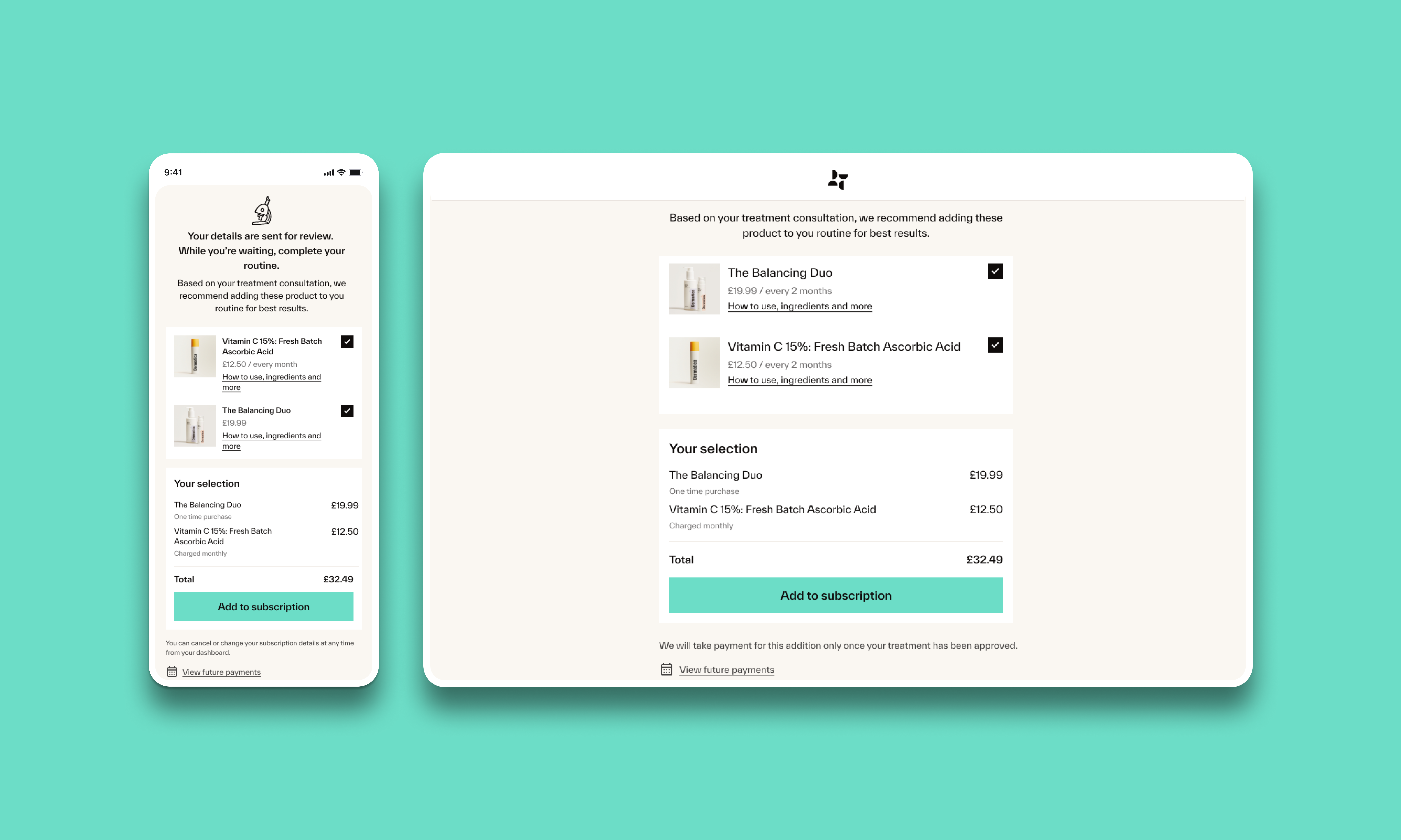
Dermatica had recently launched new over-the-counter skincare products. There were opportunities for both increasing uptake on these new products, as well as improving customer satisfaction and retention by supporting them the best way possible in their skincare journey. These new Dermatica products were specifically designed to complement the brand's core prescription cream.
Key Decisions
People change their skincare routines only when they have a concern they want to address, so we were missing an opportunity to link the products to real customer problems.
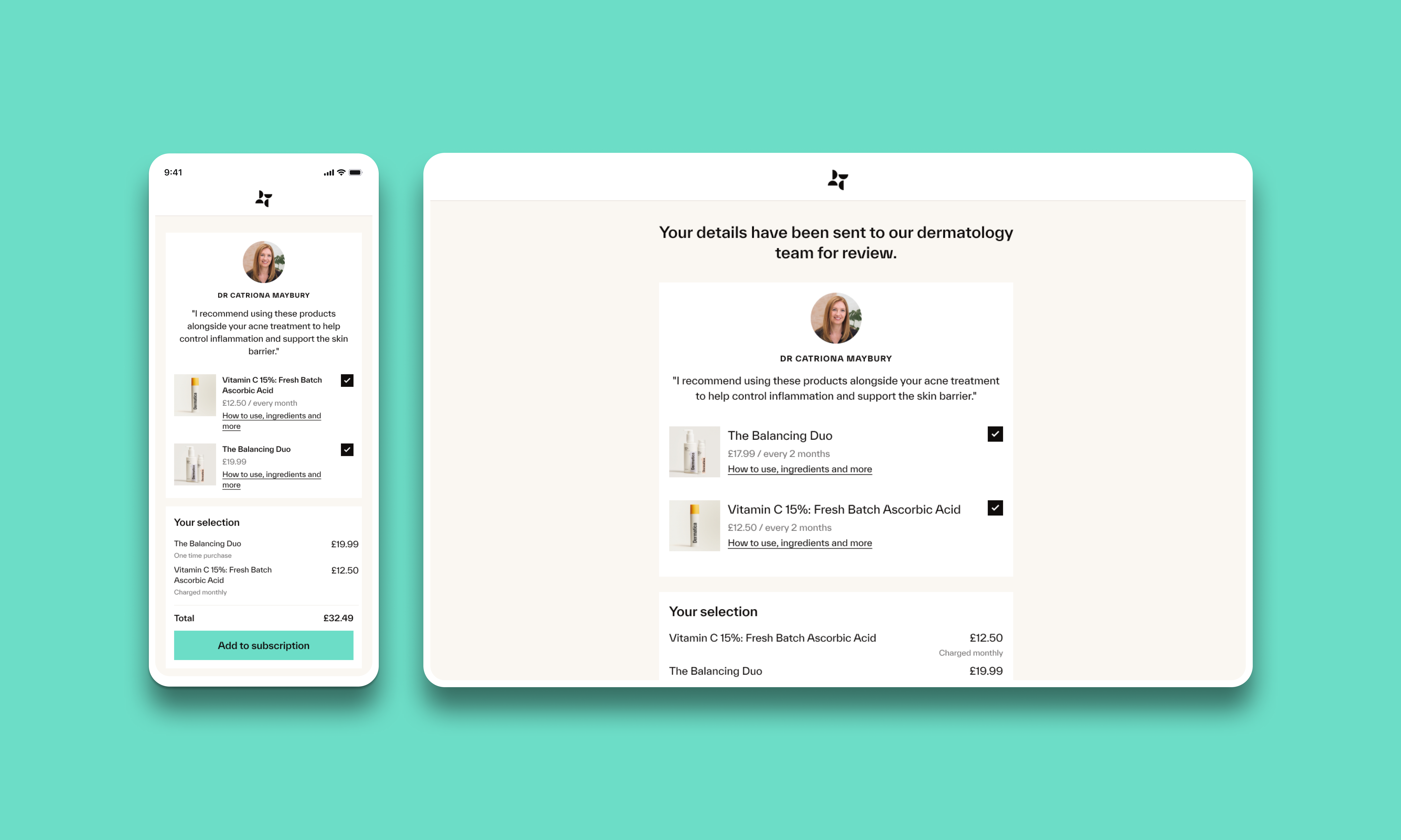
I involved the skincare doctor and specialist to help me write copy that reflects the benefit of each product to specific skincare concerns.
Through testing, I established that even though it was counter intuitive to leave the over-the-counter purchase out of the main purchase flow, it was still the right decision to make.
Process
1. Review past experiments
Increasing the uptake on over-the-counter products was one of the first problems I needed to solve as the Design Lead for the Dermatica brand. This meant that I was particularly curious about the business context driving this work, the past research and experiments that have been run. I set some time with the Product Manager for the Dermatica brand to gain a better understanding of the business drivers, review the recent experiment learnings, and set the stage for our following iterations. I also took the opportunity to inform my design work with the recent, generative user interviews I had been running on a separate topic.
2. Ideate
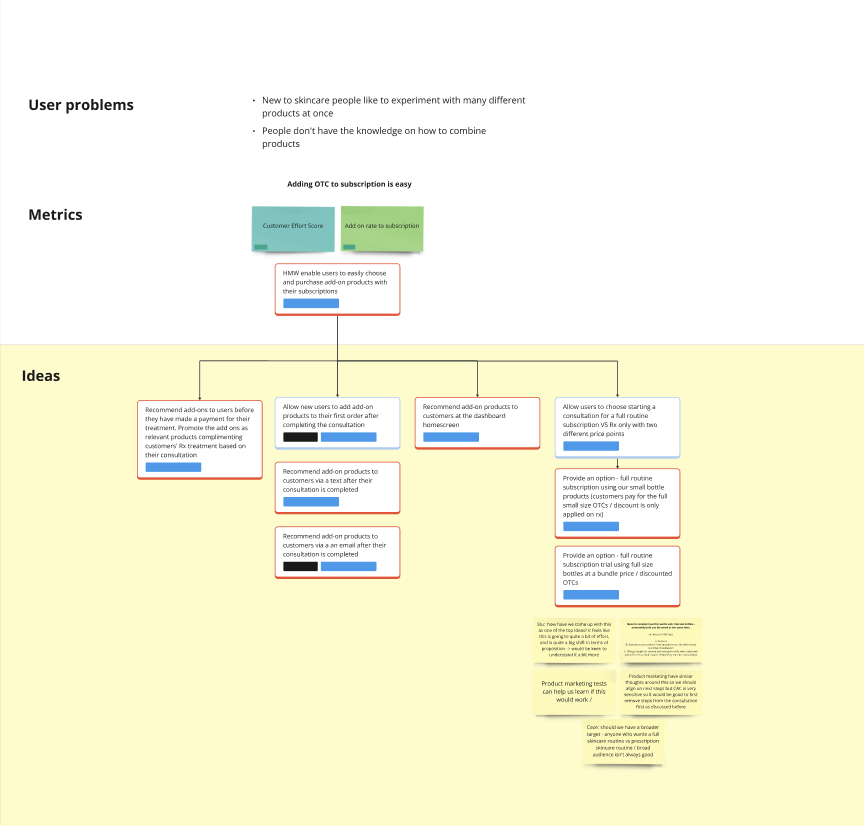
With the information gathered, I was able to generate multiple hypotheses of how we might solve the problem. I used those to design different solutions, then I presented them back to the Product Manager and the engineering team for feedback. Together, we reached a decision on what hypotheses we had most confidence in and what order to test them.
3. Design & prototype
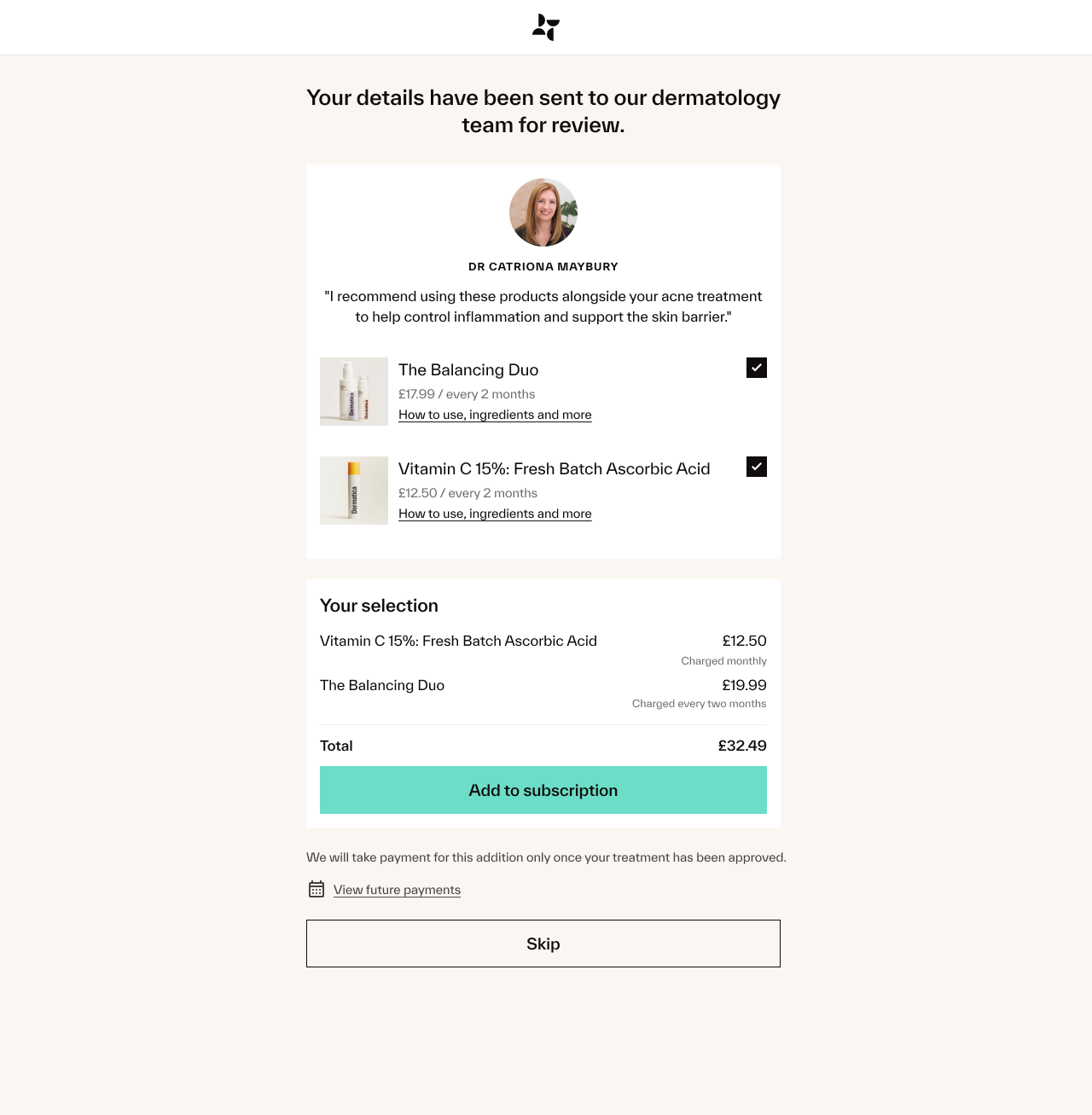
Some of the solutions required input from the clinical team, so I set some time for that early on while I continued working on the rest. The process was iterative, driven by user and design critique feedback.
4. Usability test
I tested a few solutions with users to see if there are any usability issues and if the solutions were well-perceived. The learnings fed into the design iterations.
5. Experiment and results
Once we knew which solutions were perceived best, we were ready to gather quant data with A/B tests. We tested one hypothesis at a time. The learnings from each experiment informed an updated order of following experiments and of course, updated designs.
By the time the third iteration was in testing, new subscriptions with over-the-counter products increased from 7%, when the products were first introduced in the conversion funnel, to 16% after running the first two experiments. The AOV of subscription purchases increased from £10.42 to £21.32.