Secret Escapes
Self-serve booking amendments
Enabled customers to change the dates of their bookings.
About
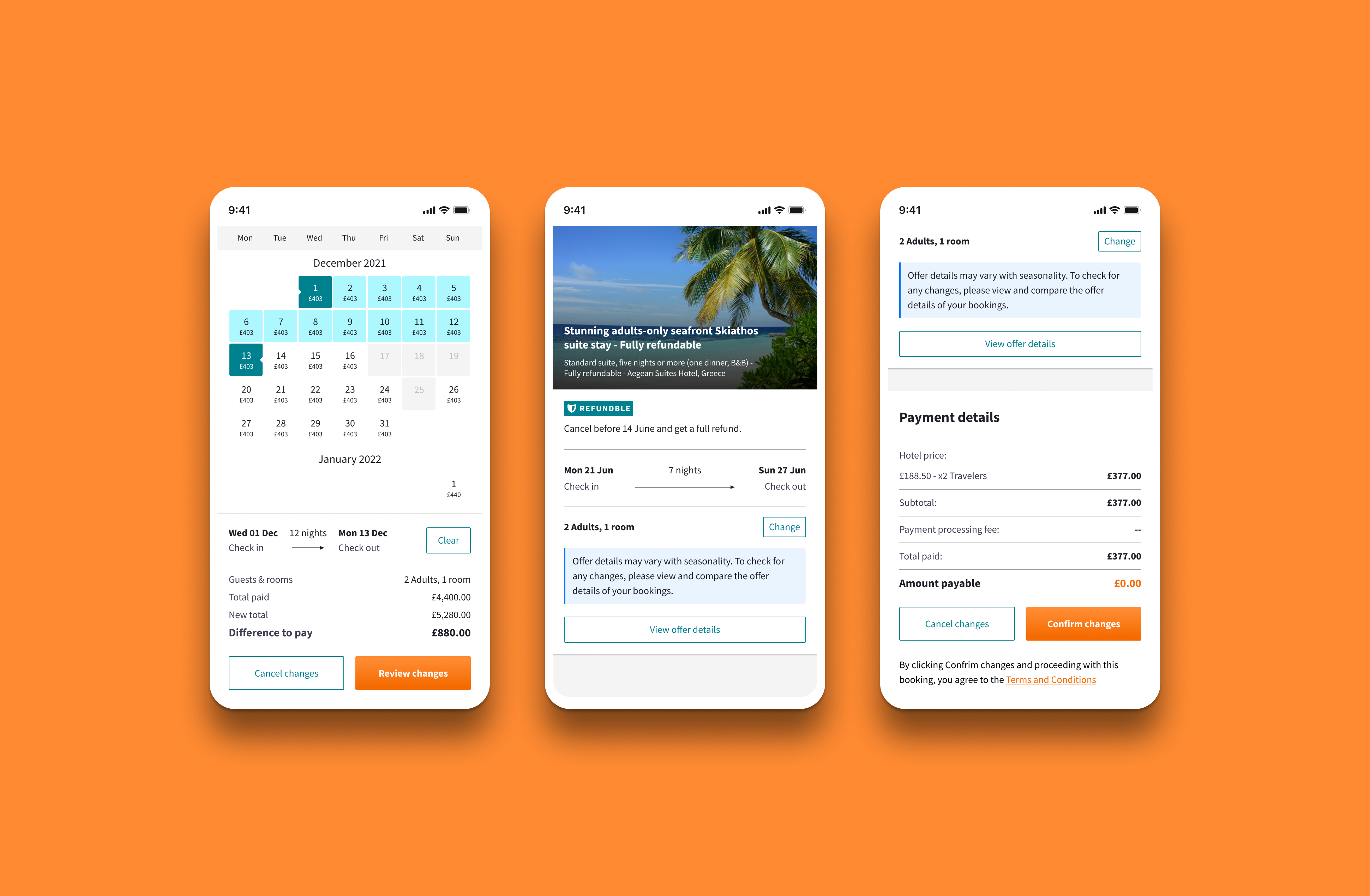
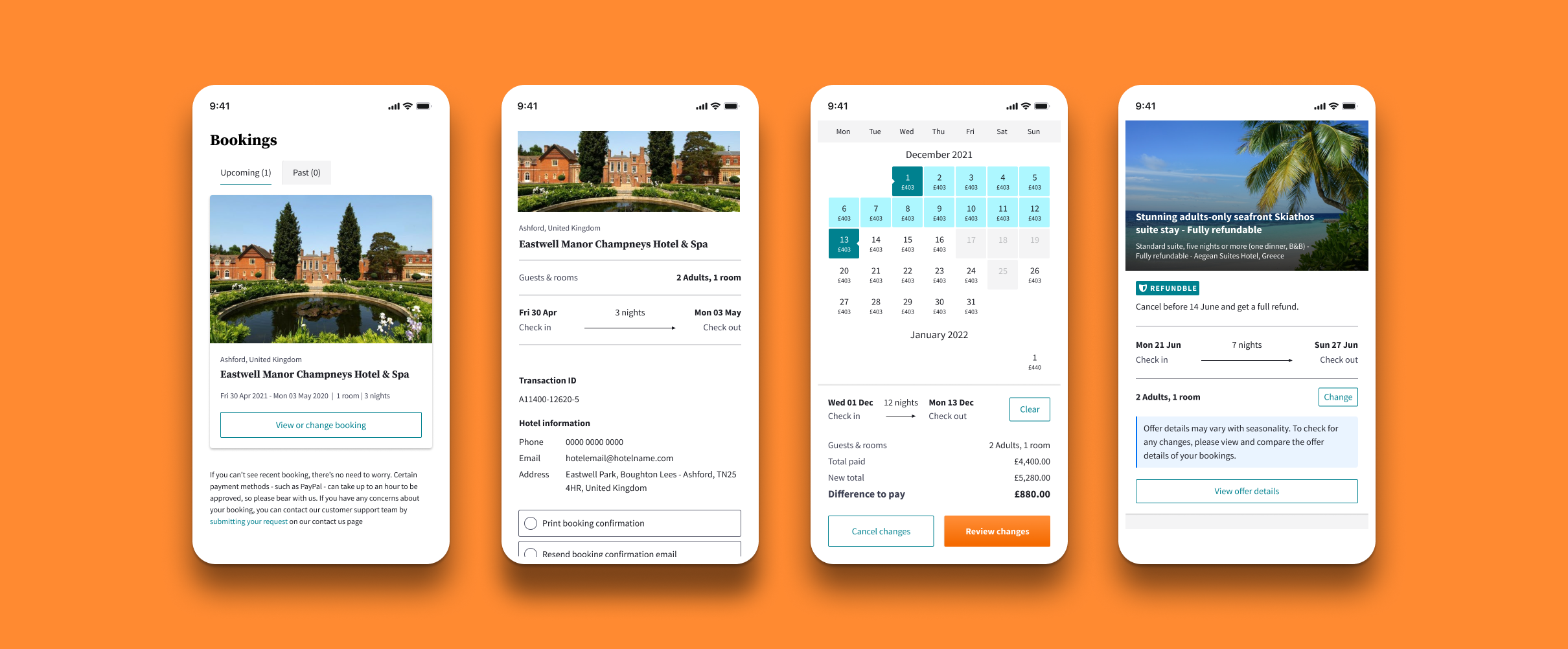
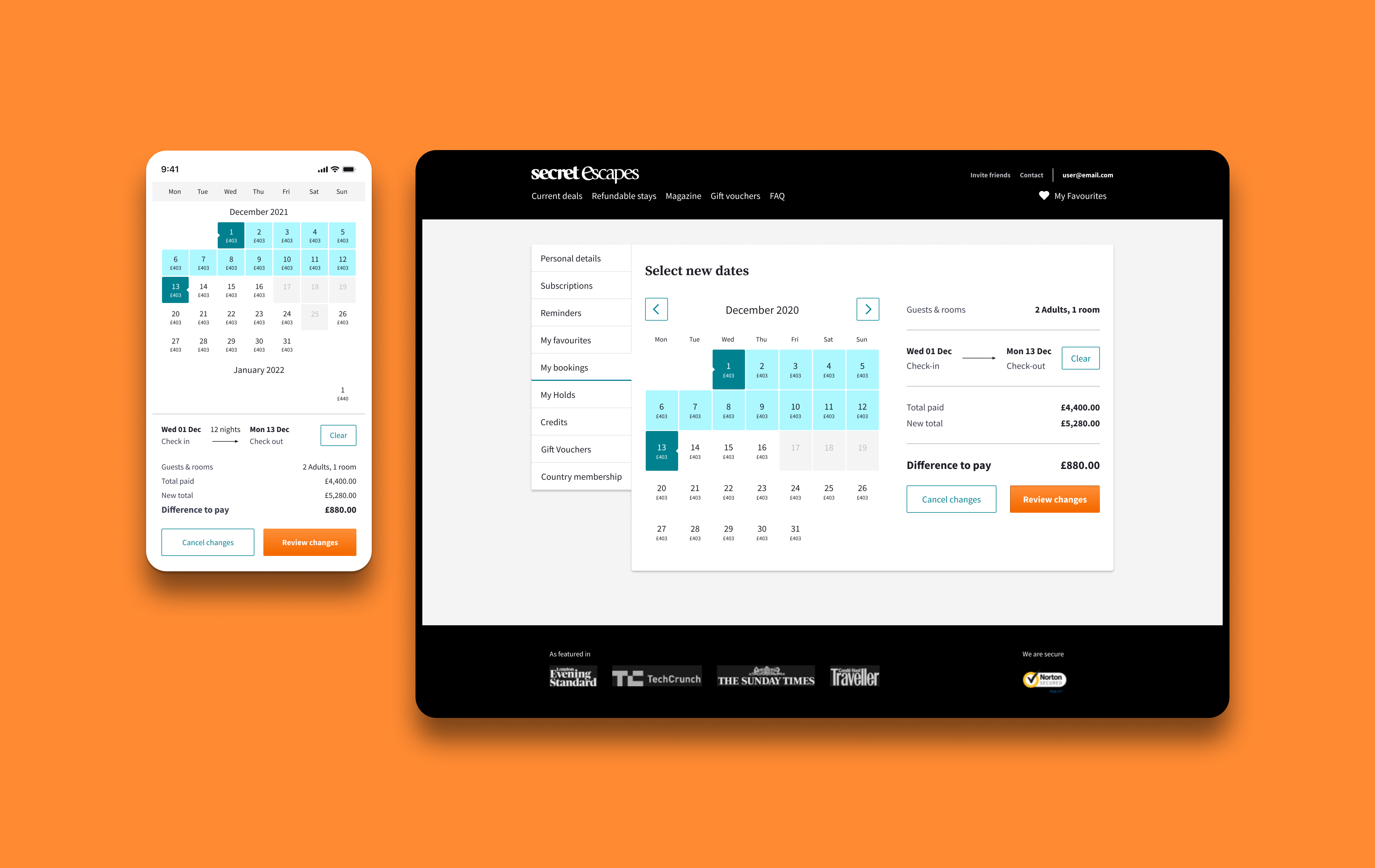
On this project, I was a lead in multiple design disciplines to ensure the successful delivery of a new product and feature which enabled Secret Escapes customers to make changes to their existing bookings.
Key Decisions
I ensured the engineers considered all difficult scenarios early on, through incorporating technical exploration as part of the design sprint.
During the course of this work, another team was working on decoupling the front end which meant step change had to happen gradually and in close collaboration with other teams.
I held working sessions with different teams across the business to endsure all customer touch points communicate the new feature clearly and coherently.
Process
1. Research and alignment
We carried out multiple research activities that complimented each other and validated our hypothesis that it would be valuable for both our customers and internal users to have a feature that enables people to make changes on their bookings. My role in this step consisted of summarising the research findings and facilitating the decision-making process in choosing the path forward.
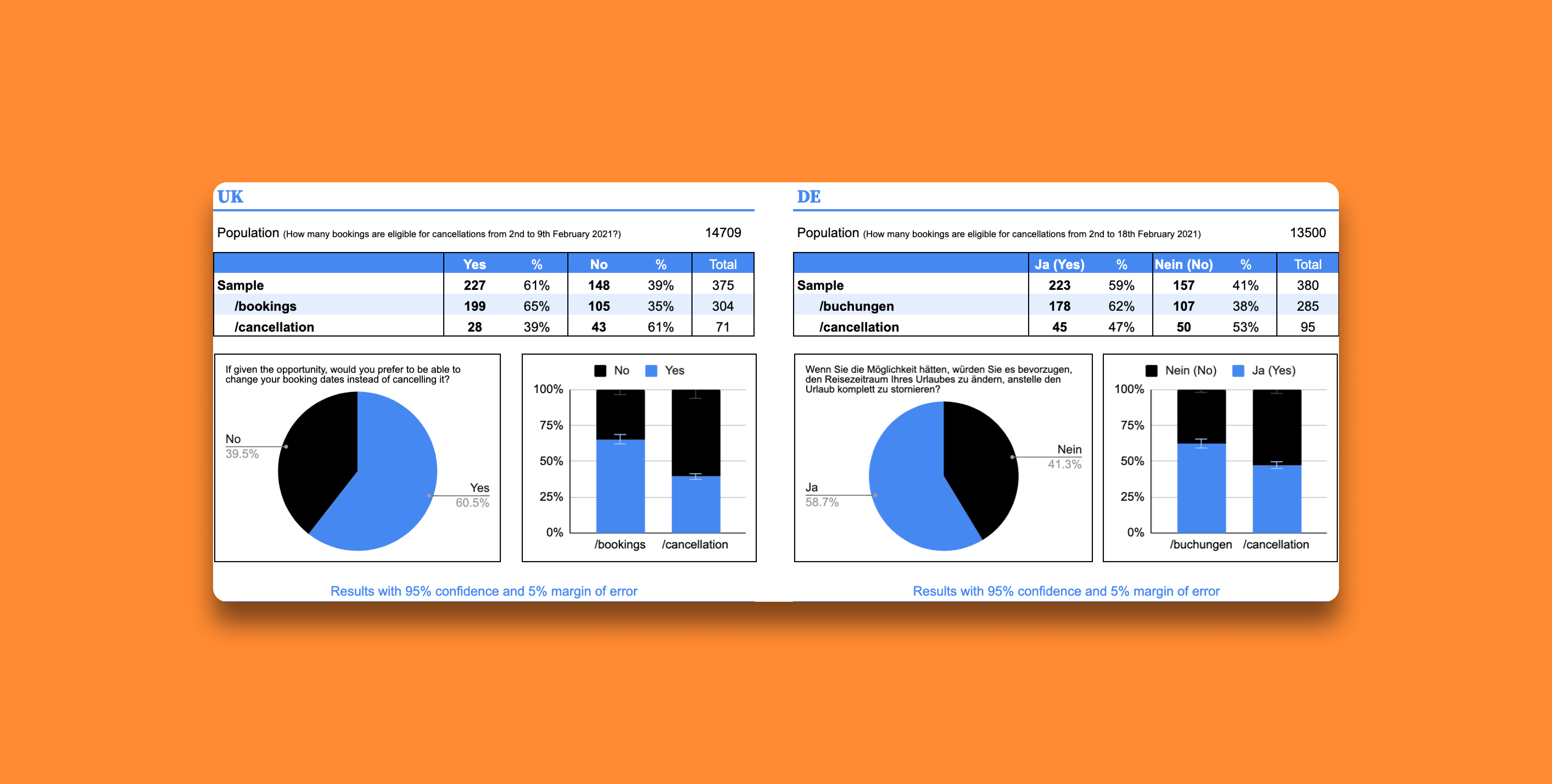
2. Organise and run a design sprint
Once we were aligned on the objective and measurement of success, we were in a position to explore the problem space and ask the big questions. To enable the team to do so, I proposed to organise and run a design sprint. The outcome of which we used to inform our discovery and delivery roadmap.
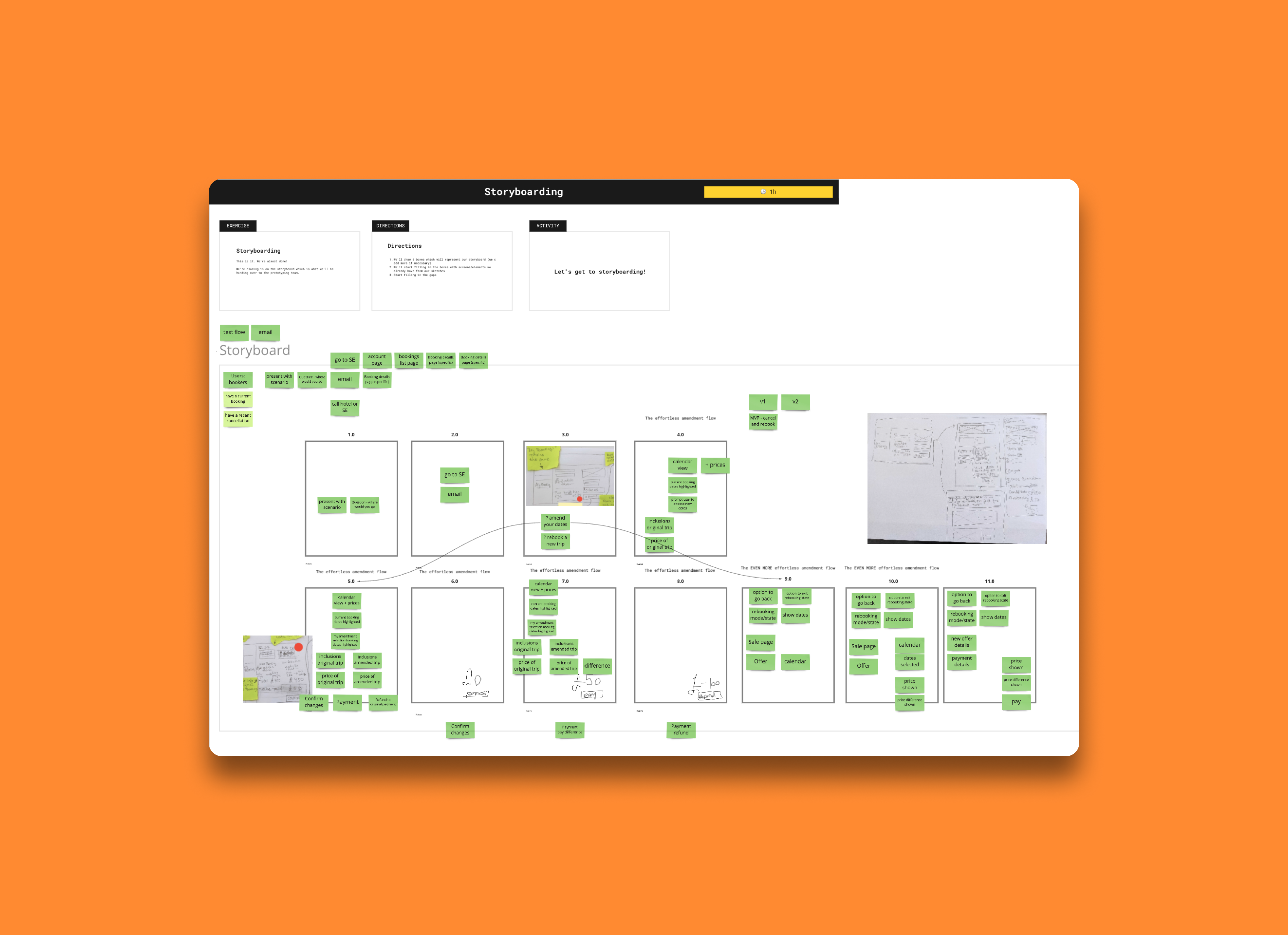
3. Discovery and delivery plan
By the end of the design sprint, we acquired valuable learnings from a user and a technical perspective. I used those learnings to facilitate and support in visualising our discovery and delivery roadmap.
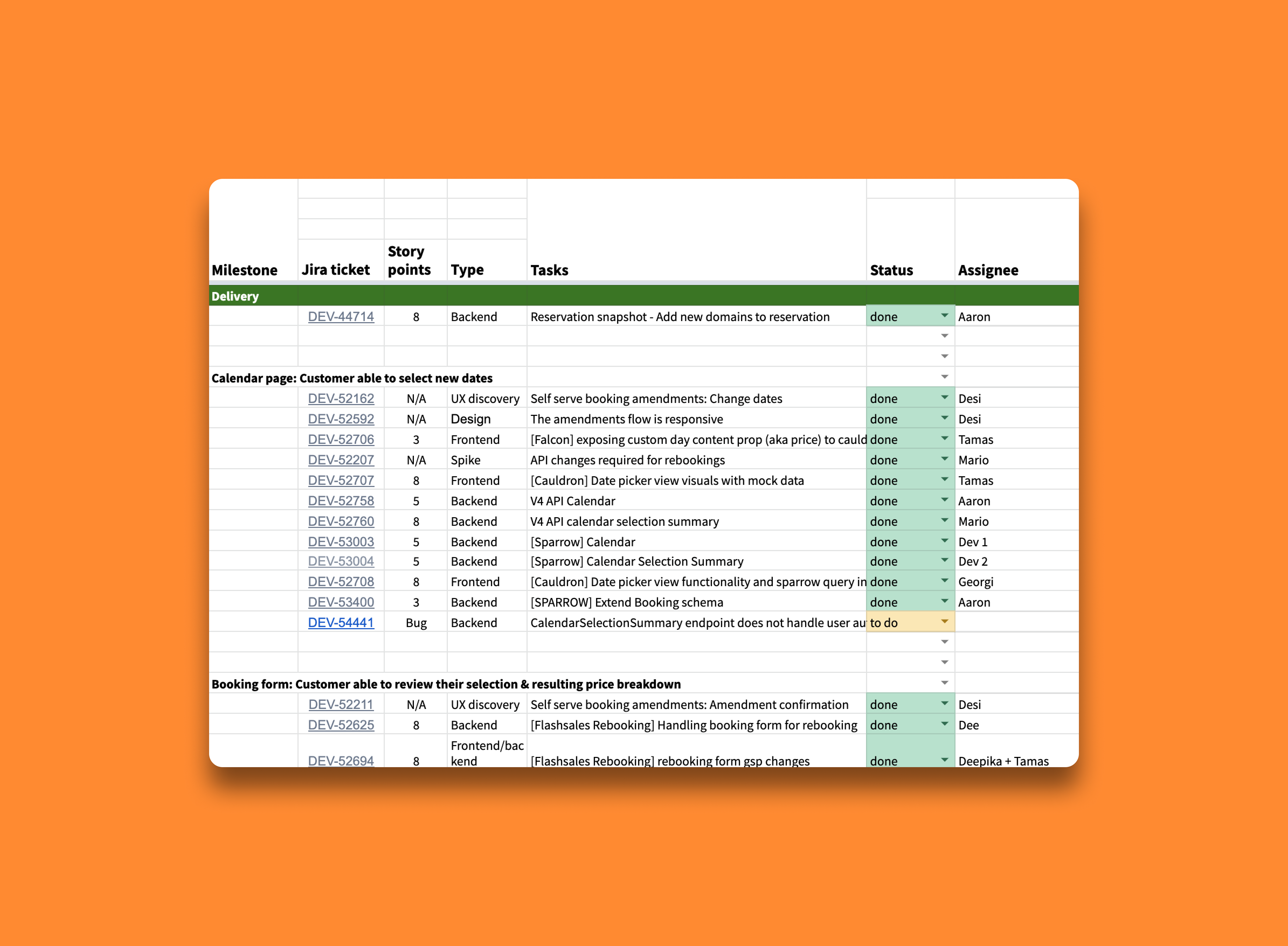
4. Delivery support and future vision
In this phase of the project, my role consisted of working closely with the engineers in order to deliver the solution I designed and make lean iterations along the way when needed, while the team was building the increments. At the same time, part of my focus was concentrated on answering unknowns that needed to be addressed before the delivery plan got more concrete. These unknowns included questions regarding existing product policies and their impact on the user experience. Communication and alignment were key.
5. Measure UX
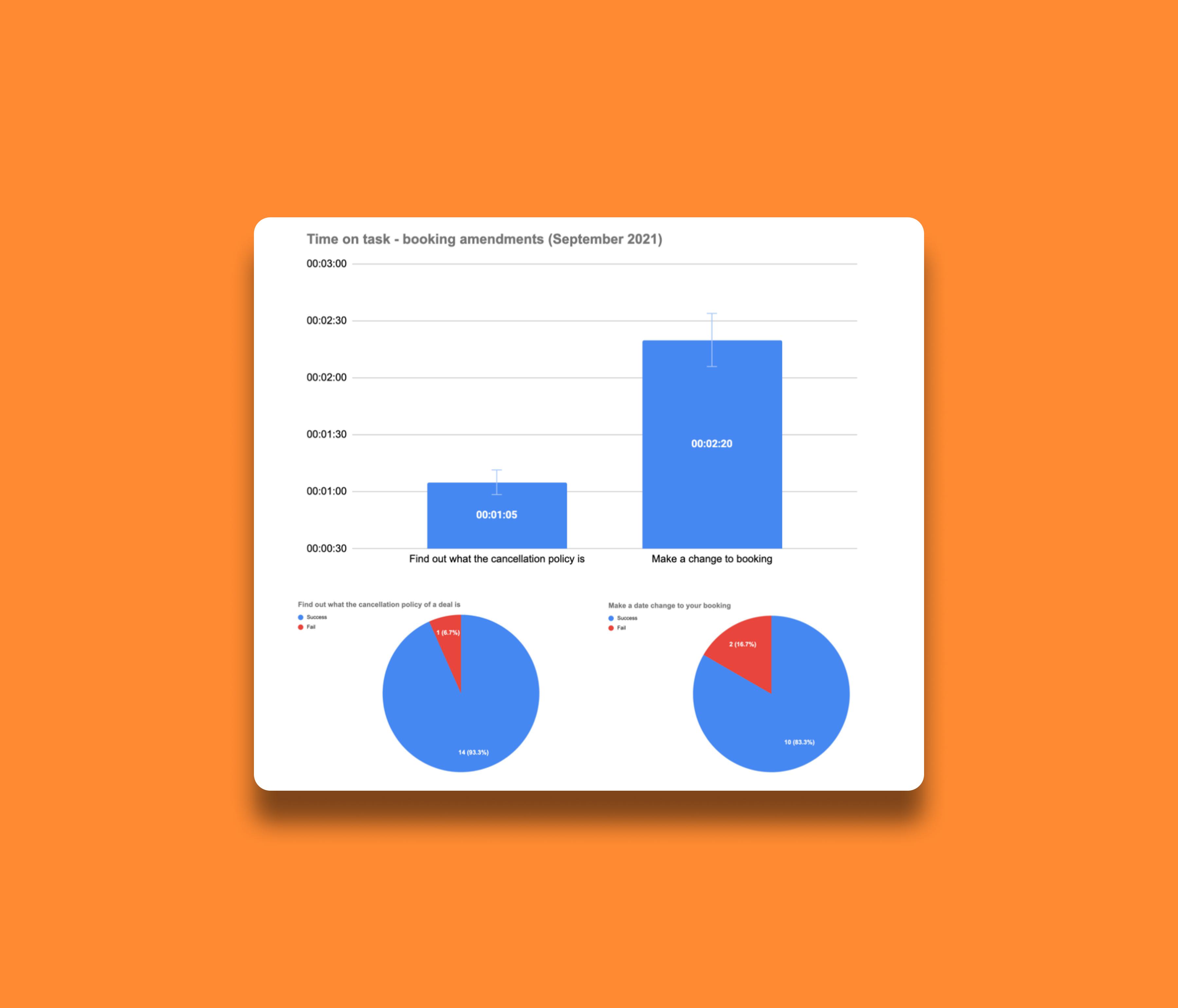
In order to assess if the team had delivered a valuable experience, we needed to measure UX performance. For this, I used two methods — task success measurement and CSAT. We were able to establish the success rate and time on task for the two key user needs in this flow. The results helped us inform future improvements and review our OKRs with a sense of achievement.