Secret Escapes
Virtual card payment service
Designed a virtual card payments service, increasing the company’s cash flow and profit.
About
On this project, I was leading all research and service design activities to help deliver a new payment flow between Secret Escapes and all their hotel partners. Building this virtual card payment service was part of a revenue management initiative, involving several functions of the business — tech, product, finance, and sales. The goal was to enable faster payments and additional generated revenue from rebates.
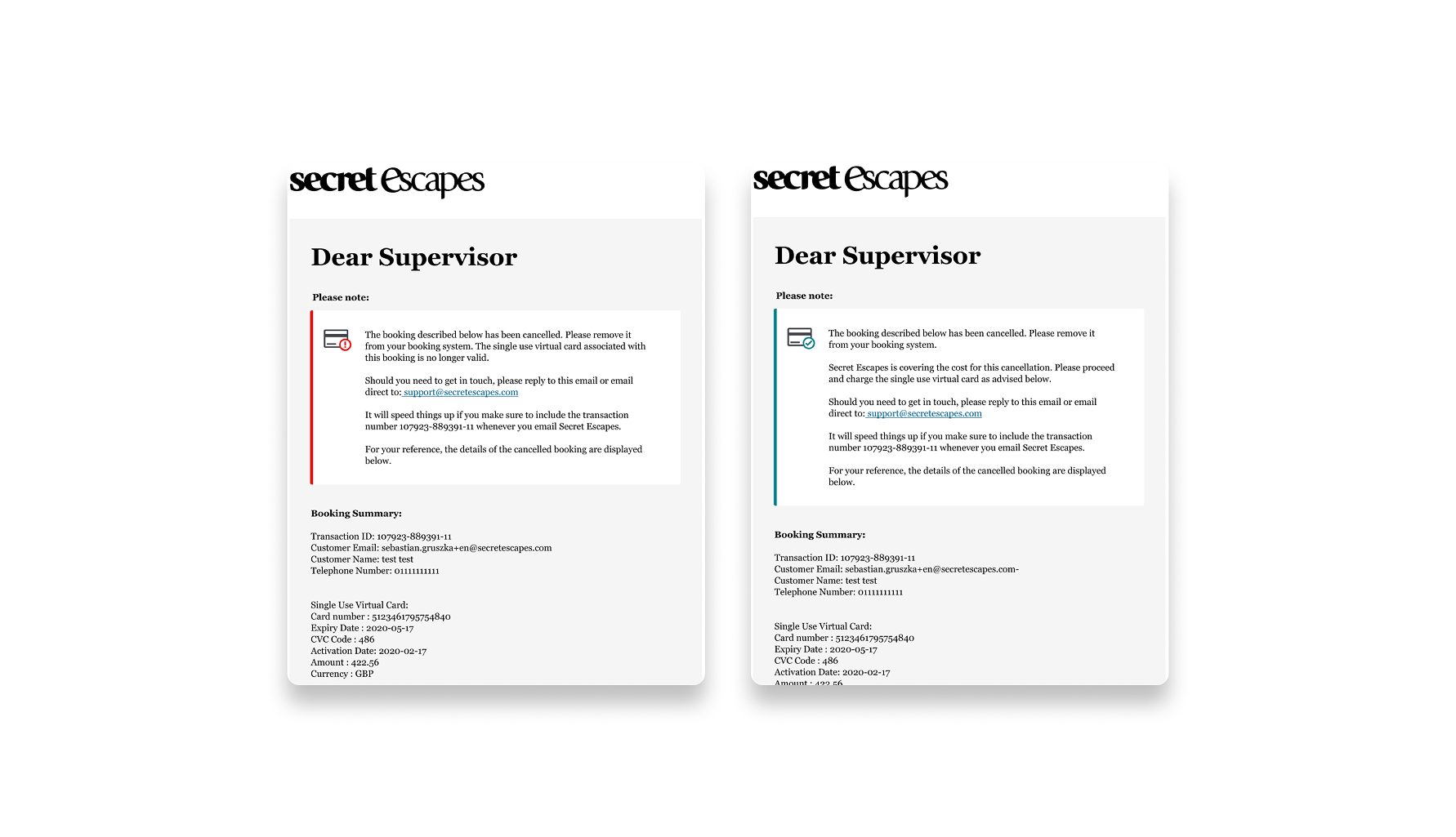
Key Decisions
Extremely valuable as it cleared risks early and set the foundations of our PoC.
This was key to help the team uncover further scenarios we needed to cater for and have minimal disruption of current processes.
Capturing feedback from our partners and different teams involved, helpes us prioritise the most critical friction points towards the end of the project.
Process
1. Gathering domain knowledge, aligning & visualising
To kick off the initiative I chose to run an Event Storming workshop, originating from the context of domain-driven design. The product manager, team lead and myself considered this type of workshop fit for the initiative due to the project's underlying complexities and multiple business functions involved. The format allows for those complexities to come to surface early as well as to align the different domain experts and enable them to learn about the service together, with each bringing their own expertise to the table.
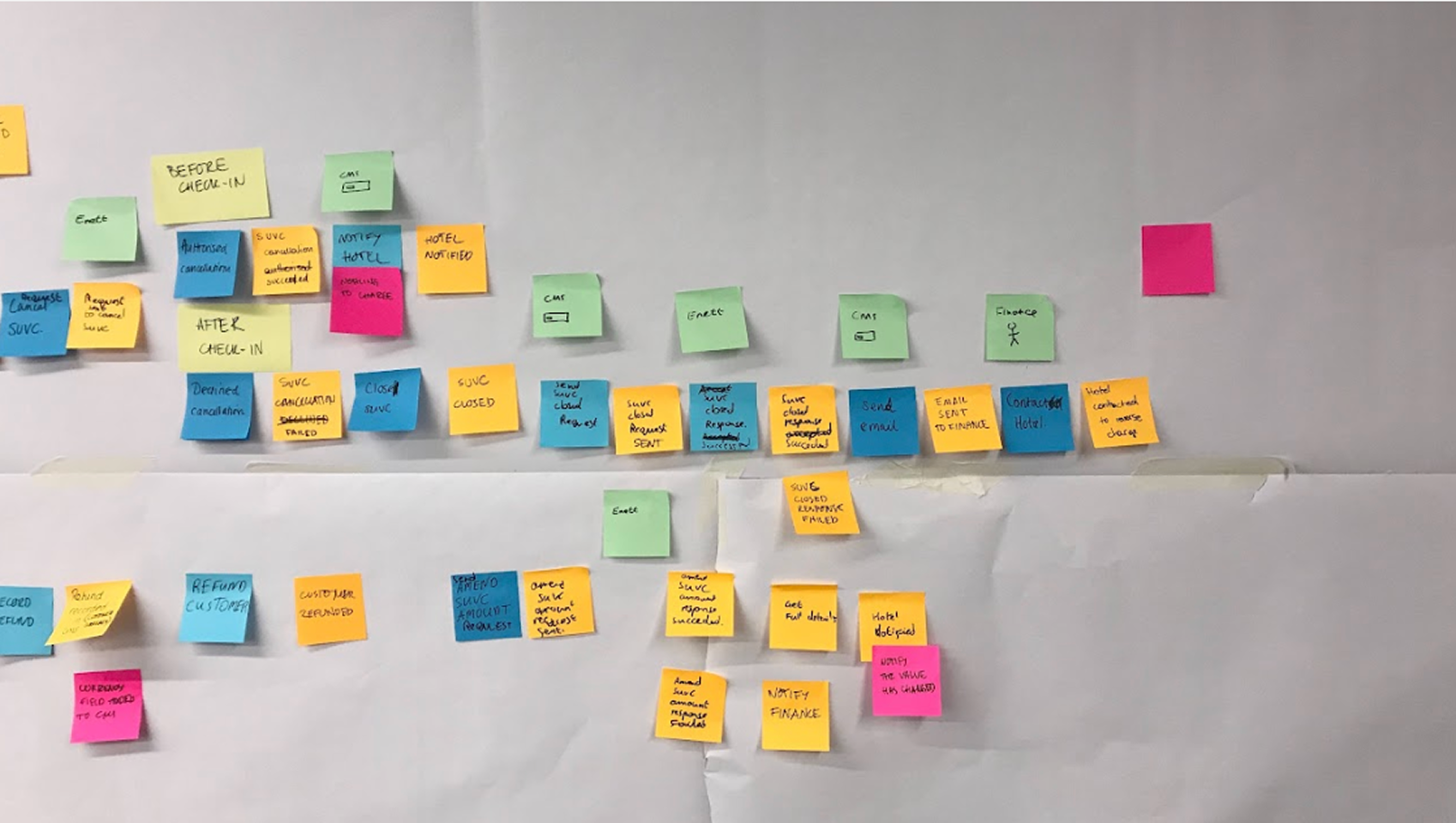
2. Roadmap planning for the PoC
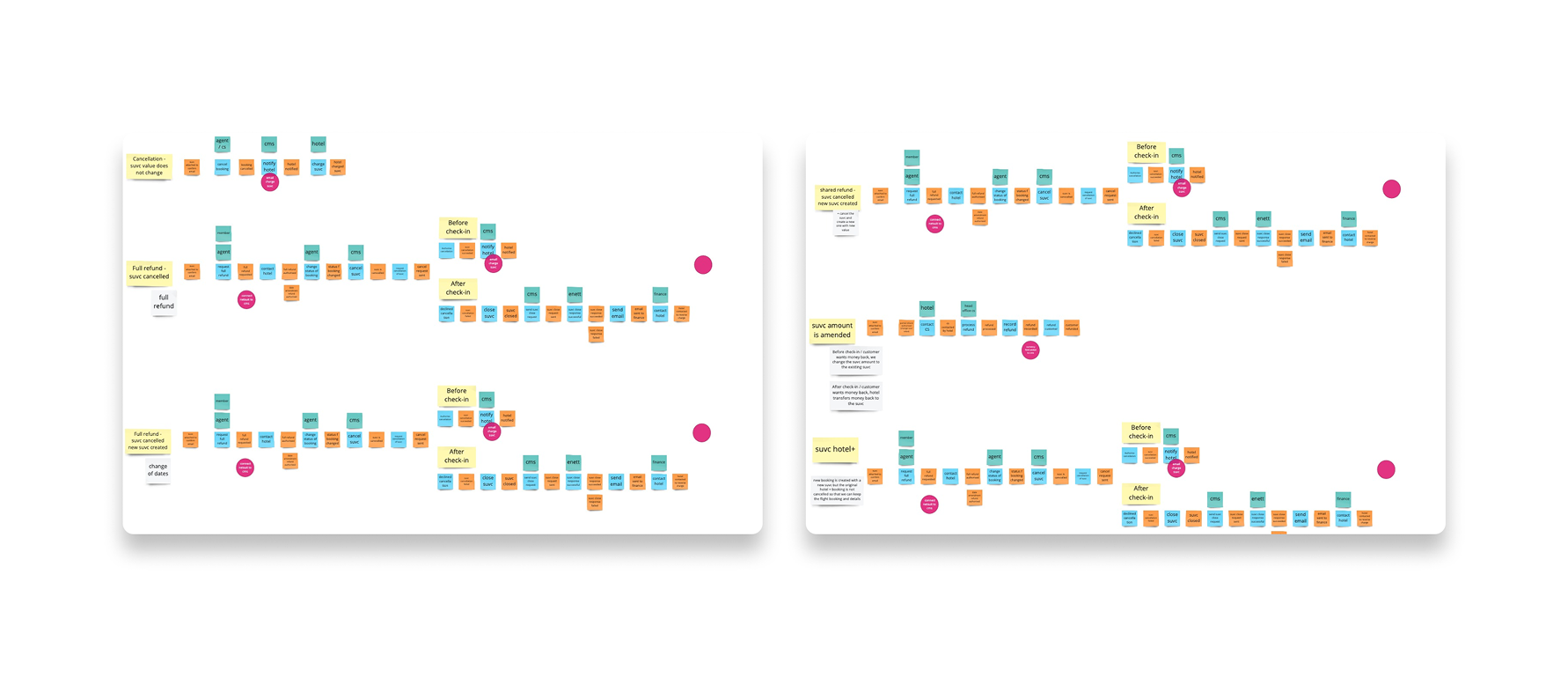
After having aligned the domain experts on the ideal events flow of the service, as a cross functional team, we were able to make a decision on how to break down the work for the PoC build and the chunks of work were put into the delivery backlog.
3. Discovery
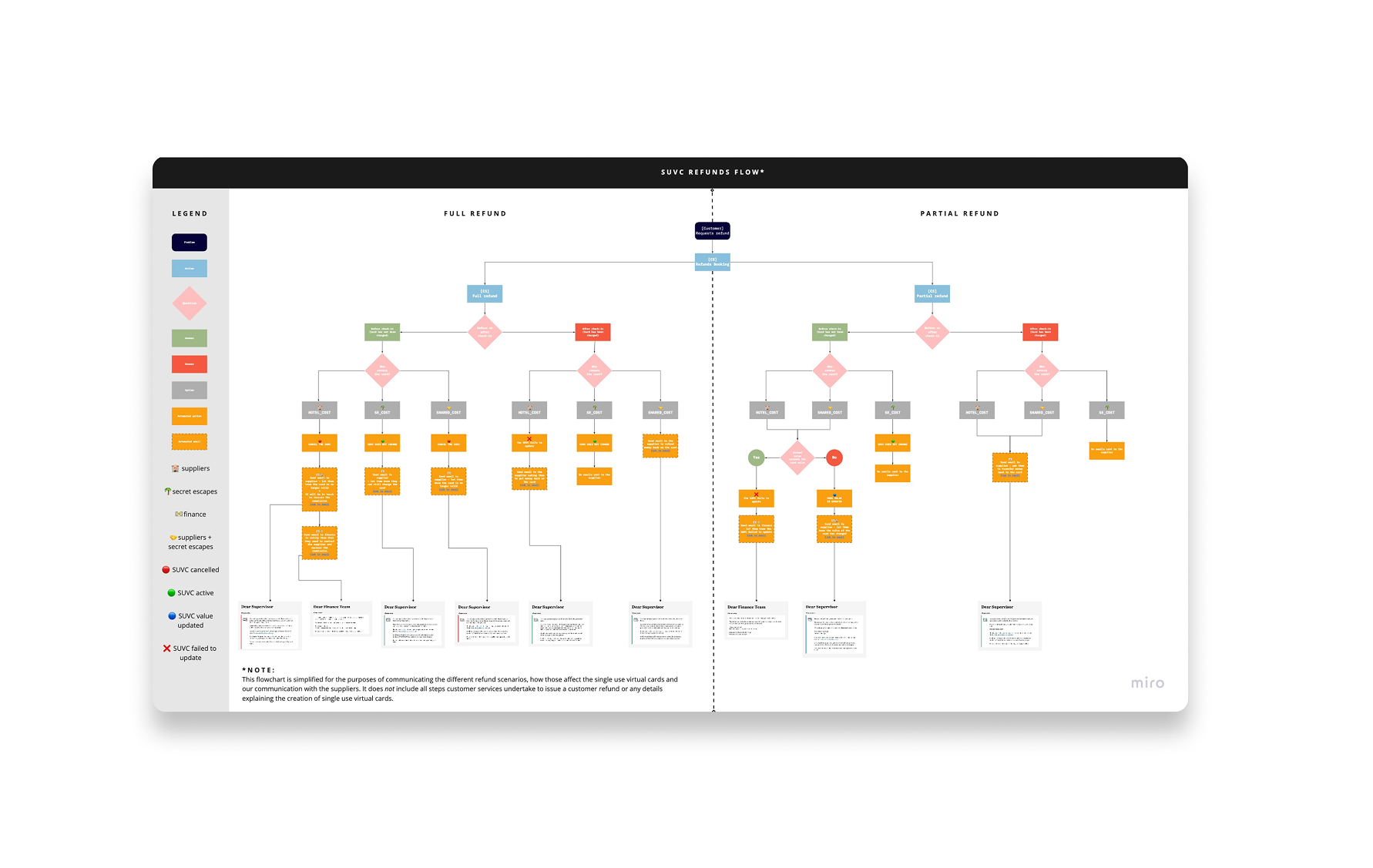
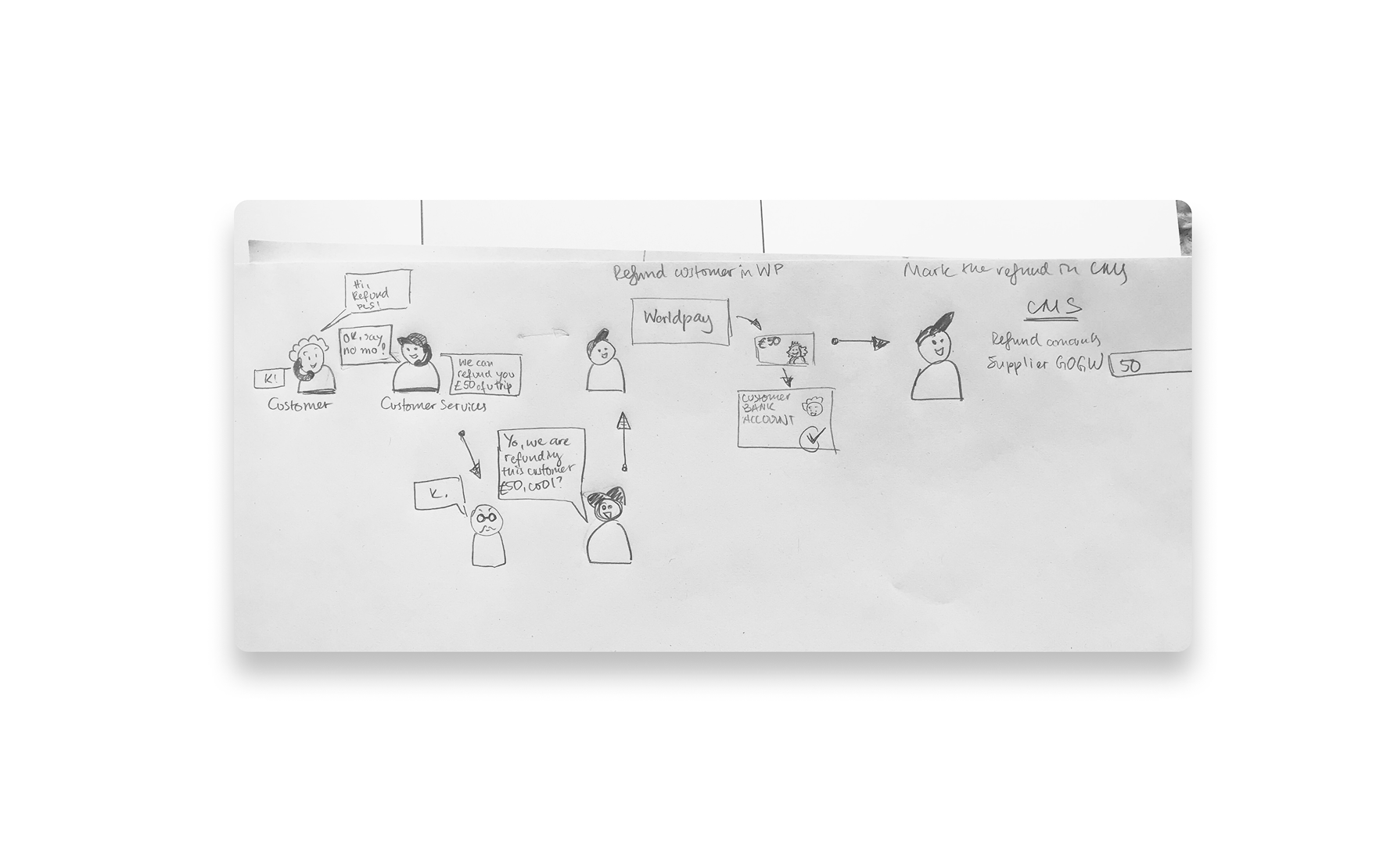
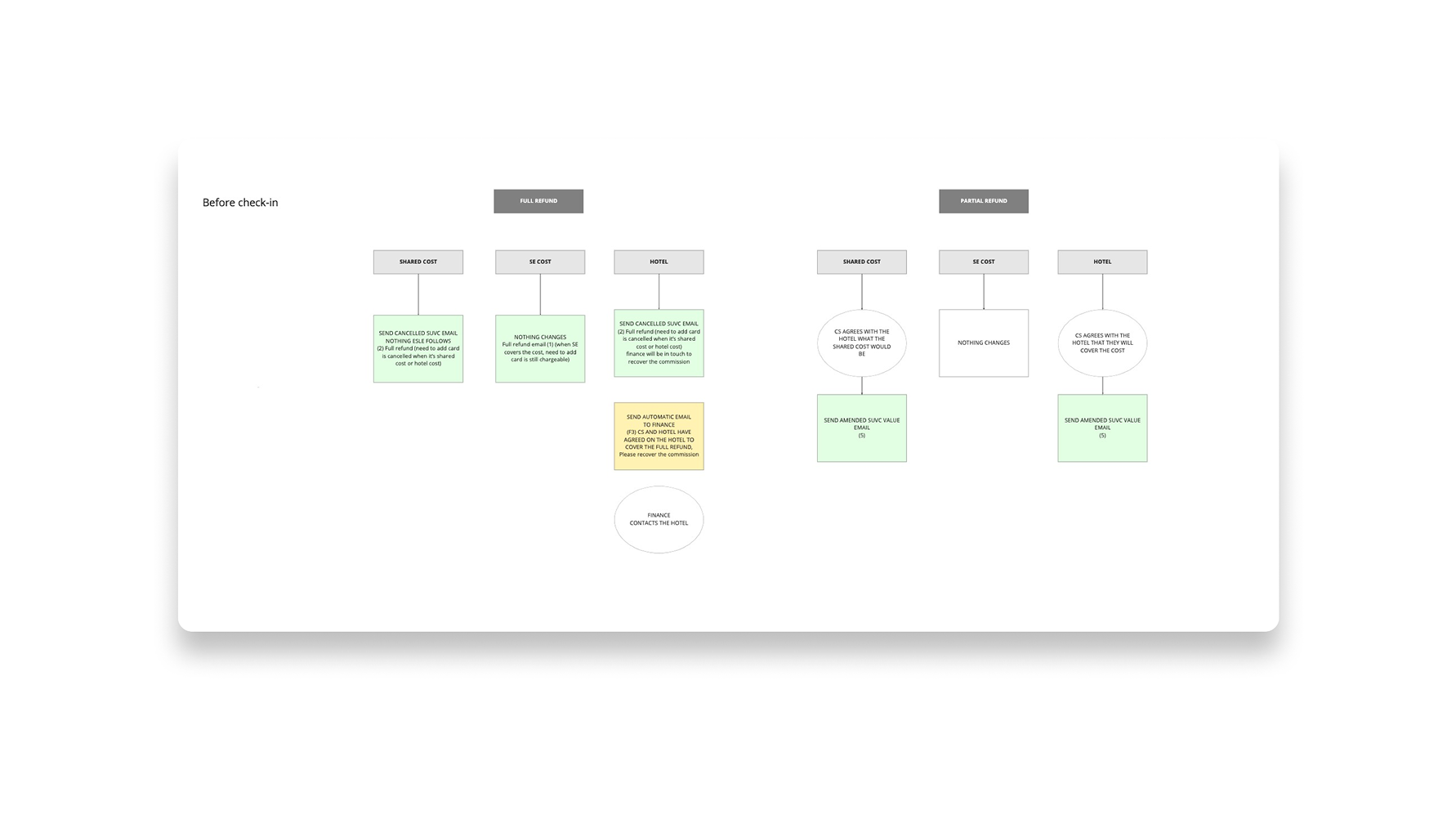
After we had a clear view of the technical work required for the PoC, the product manager and myself started planning the discovery work and prioritised it in alignment with delivery. The Event Storming workshop we ran as a kick off uncovered the complex areas which was our cue of where we need to do further investigation and ideate on potential solutions. Cancellations and refunds were two key areas holding unknowns and complexities. Interviewing members of the customer service team and finance helped us understand the multiple work streams that were in place in order to make customer refunds and cancellation possible. We were able to identify the key user needs and make sure those are met with the implementation of the new service. Some of the design solutions proposed fitted the existing user flow, the ones that didn't were usability tested and iterated upon before the build.
4. Delivery
Working with the engineers in two work streams — current and future. For the current work I was involved in the delivery process by doing design reviews of the solution implementation before release. For the discovery future work stream, I would communicate and collaborate with the developers to explore the problem space and potential solution as well as understand the technical limitations.
5. Feedback
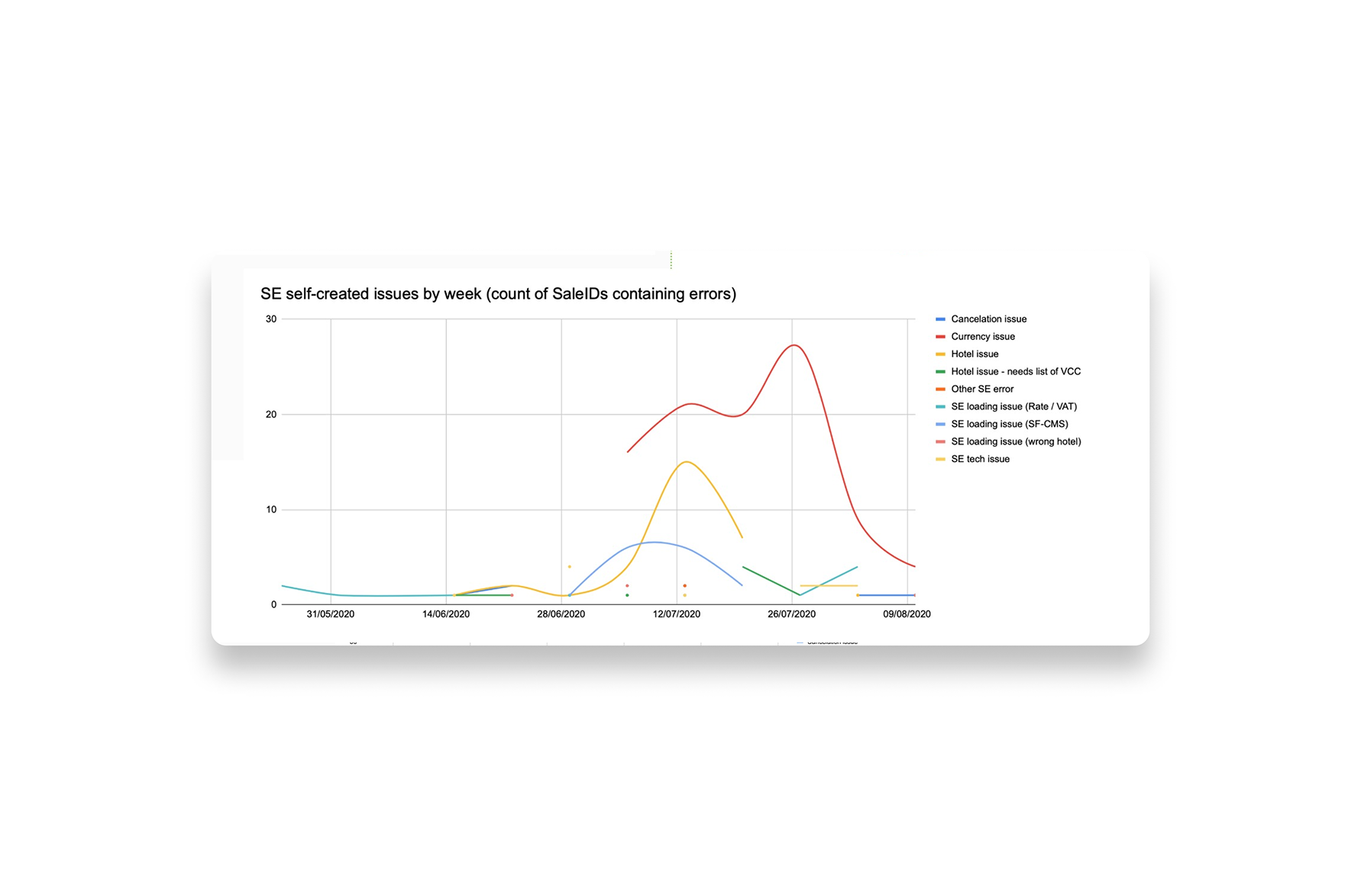
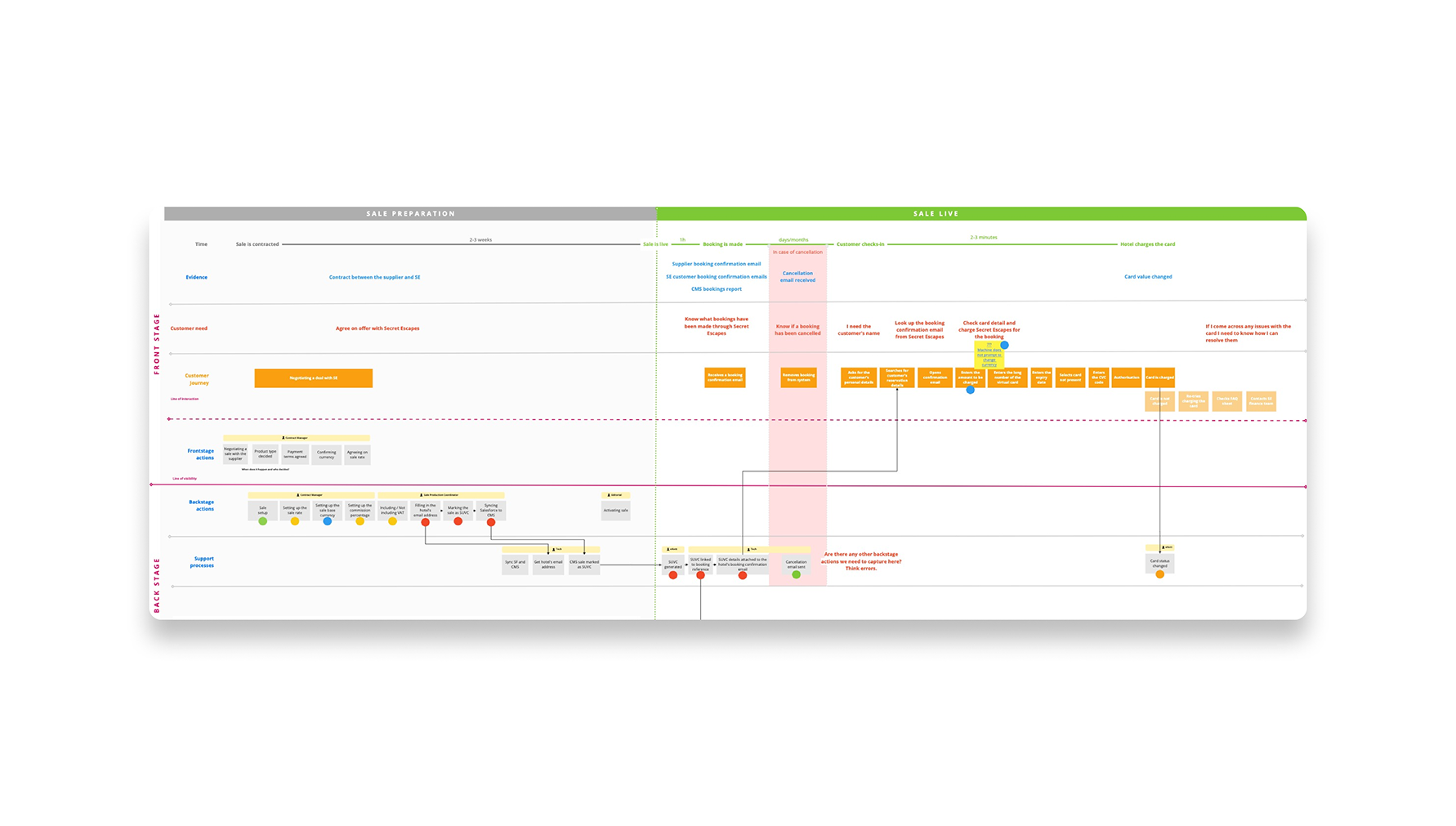
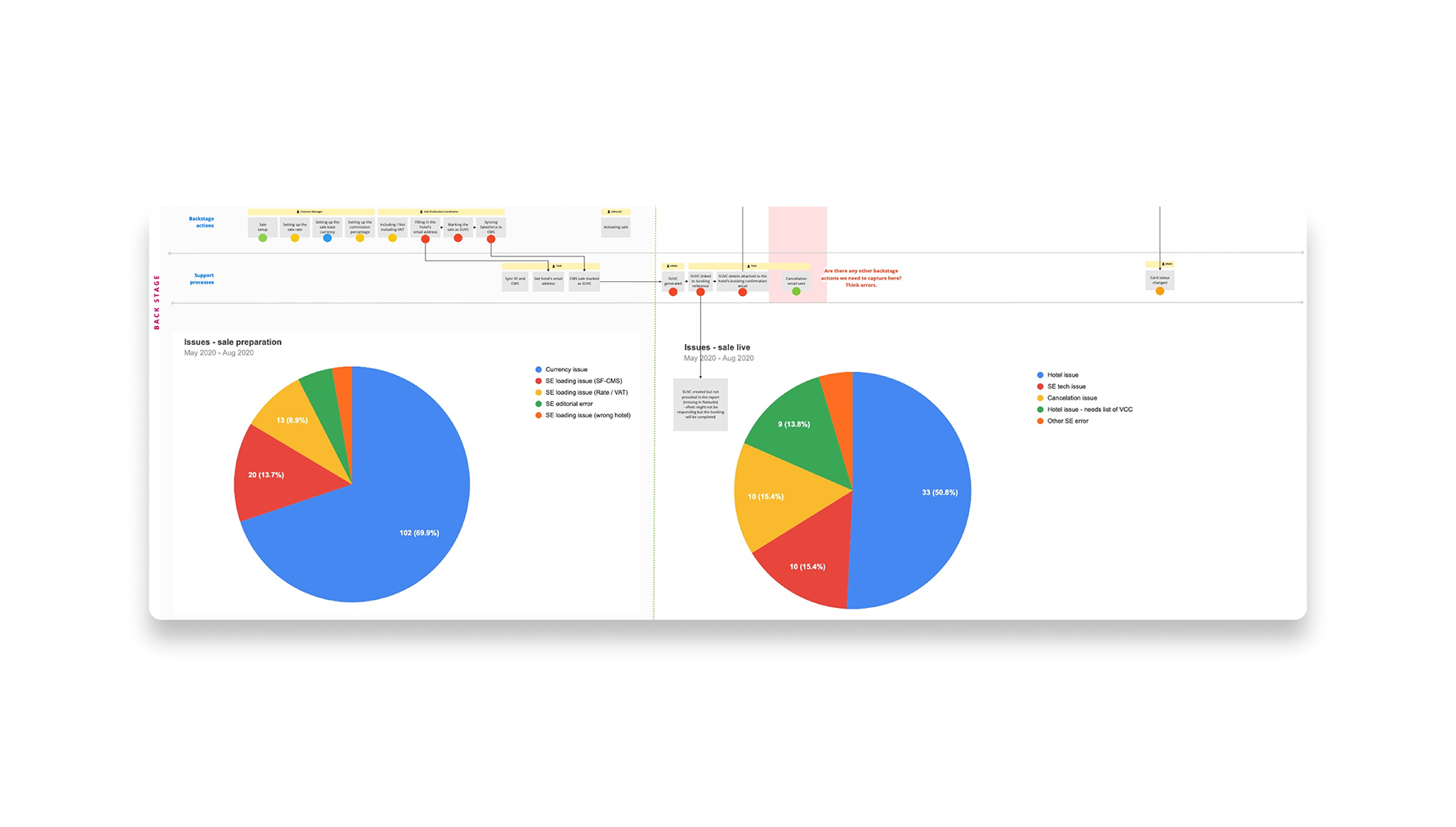
After PoC was live for a limited number of users, we were able to gather feedback on how the service is performing and identify pain points. To communicate the severity of the issues, their position in the service and correlation with the initiative's objective, I used a service blueprint created and validated with the domain experts. The blueprint clearly pointed out to the areas that required iteration, which helped the stakeholders agree on prioritising the work.